

Knowledge Graph is a key part of Google’s search infrastructure. It’s a database that helps the search engine – and its AI surfaces – understand queries and return relevant results. That makes it important for any brand concerned about organic visibility.
Here’s what you need to know about Knowledge Graph’s structure, its role in search mechanics, and its impact on modern SEO. I’ll also break down 5 ways you can strengthen your own Knowledge Graph entity.
What Is Knowledge Graph?
Google Knowledge Graph is, to quote the search giant itself, a ‘database of billions of facts about people, places, and things’. It’s essentially a giant map made up of entities (concepts) and edges (the relationships between concepts).
Knowledge Graph was originally launched in 2012, drawing on public sources such as Wikipedia, the CIA World Factbook, and Freebase. Today, Google continues to incorporate public sources, ‘license data to provide information such as sports scores, stock prices, and weather forecasts’, and ‘receive factual information directly from content owners in various ways, including from those who suggest changes to knowledge panels they’ve claimed’.
How Knowledge Graph Works
Knowledge Graph is basically what it sounds like: a very large knowledge graph, which is a map comprising entities and their associated edges.
[image]
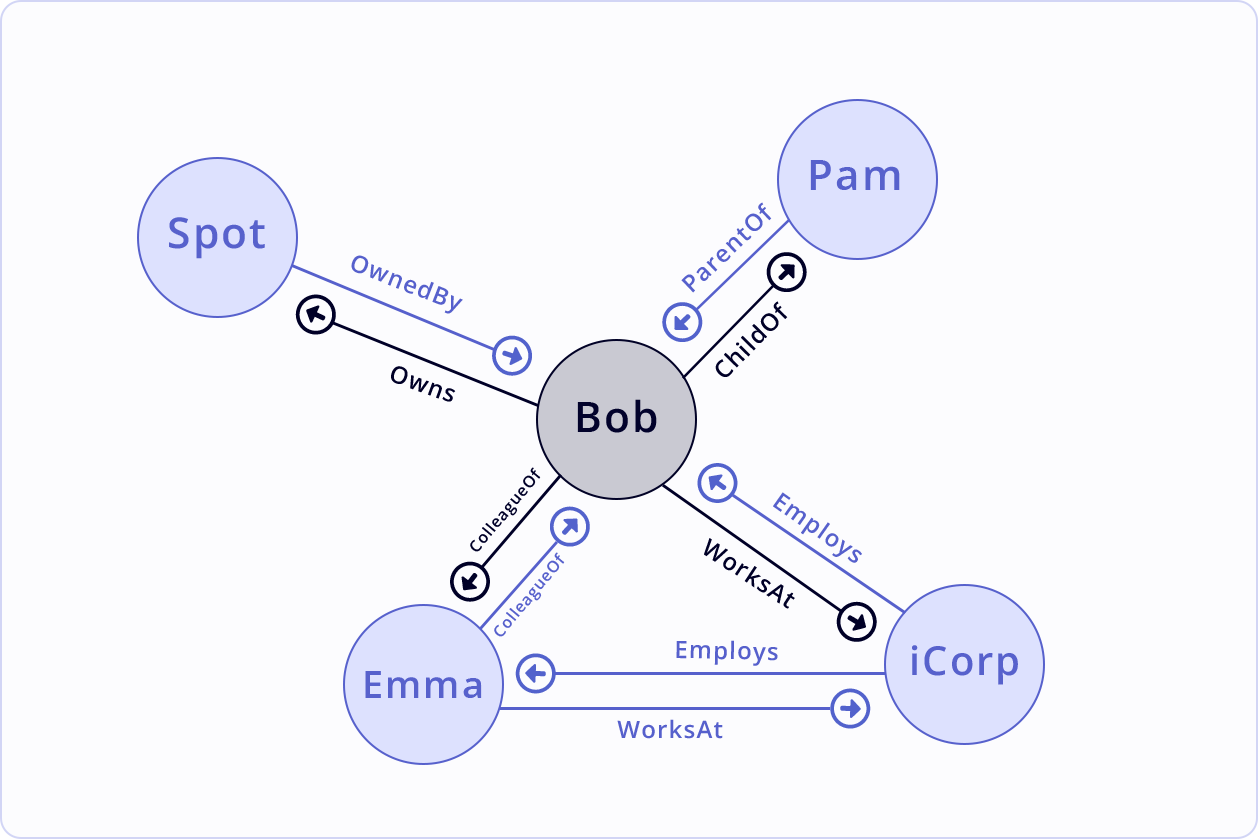
Entities are nodes in the graph. Each entity represents a distinct concept like a person, place, idea, event or object. Typically, an entity’s name is enriched with other kinds of structured data (known as attributes), like a brief description, a website URL, and the type of entity it is.
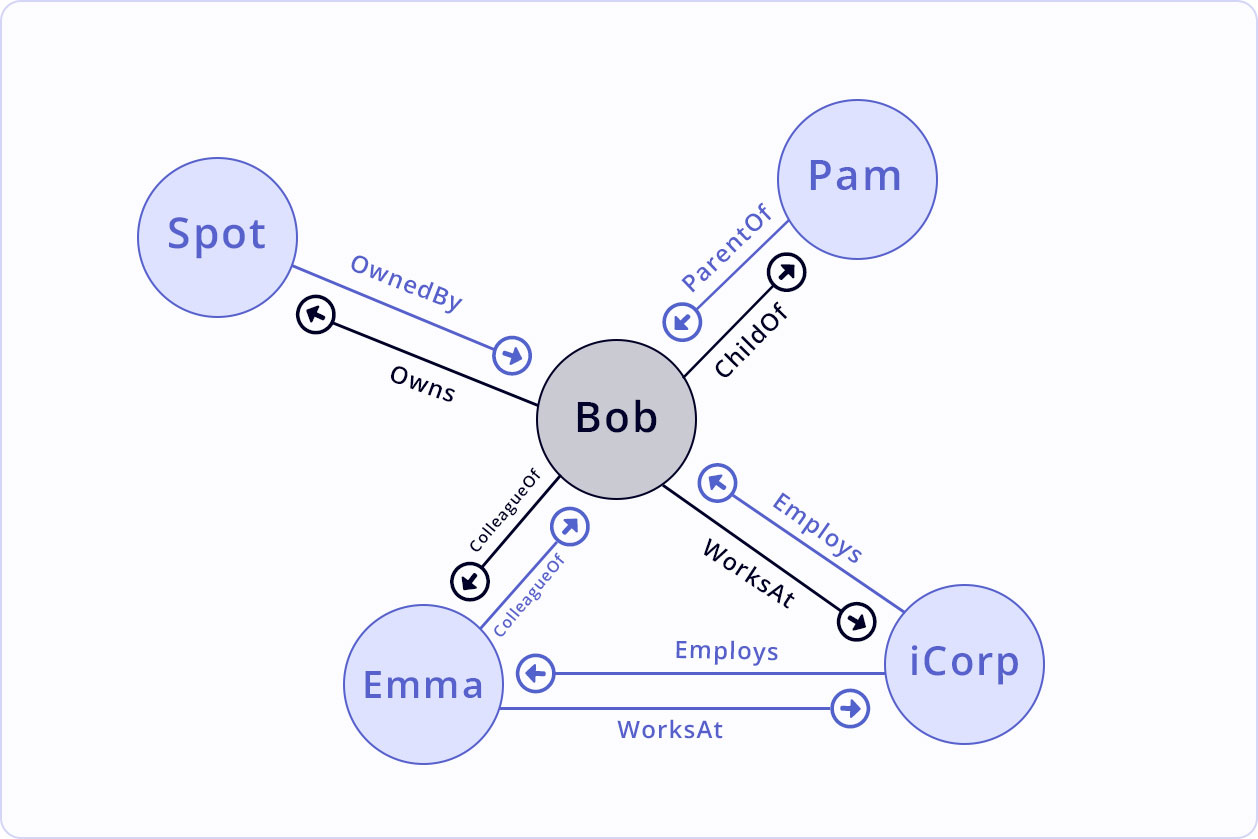
Edges are the connections between entities. Each edge indicates the kind of relationship between one entity and another. Importantly, the relationship indicated by an edge isn’t symmetrical. Instead, entities and edges occur in triplets – a subject entity, a predicate edge, and an object entity. For example, if Bob owns a dog called Spot, Bob would be the subject, the edge would indicate an ‘owns’ relationship, and Spot would be the object. Conversely, the edge from Spot to Bob would indicate an ‘ownedBy’ relationship.
Knowledge Graph Versus Knowledge Panel
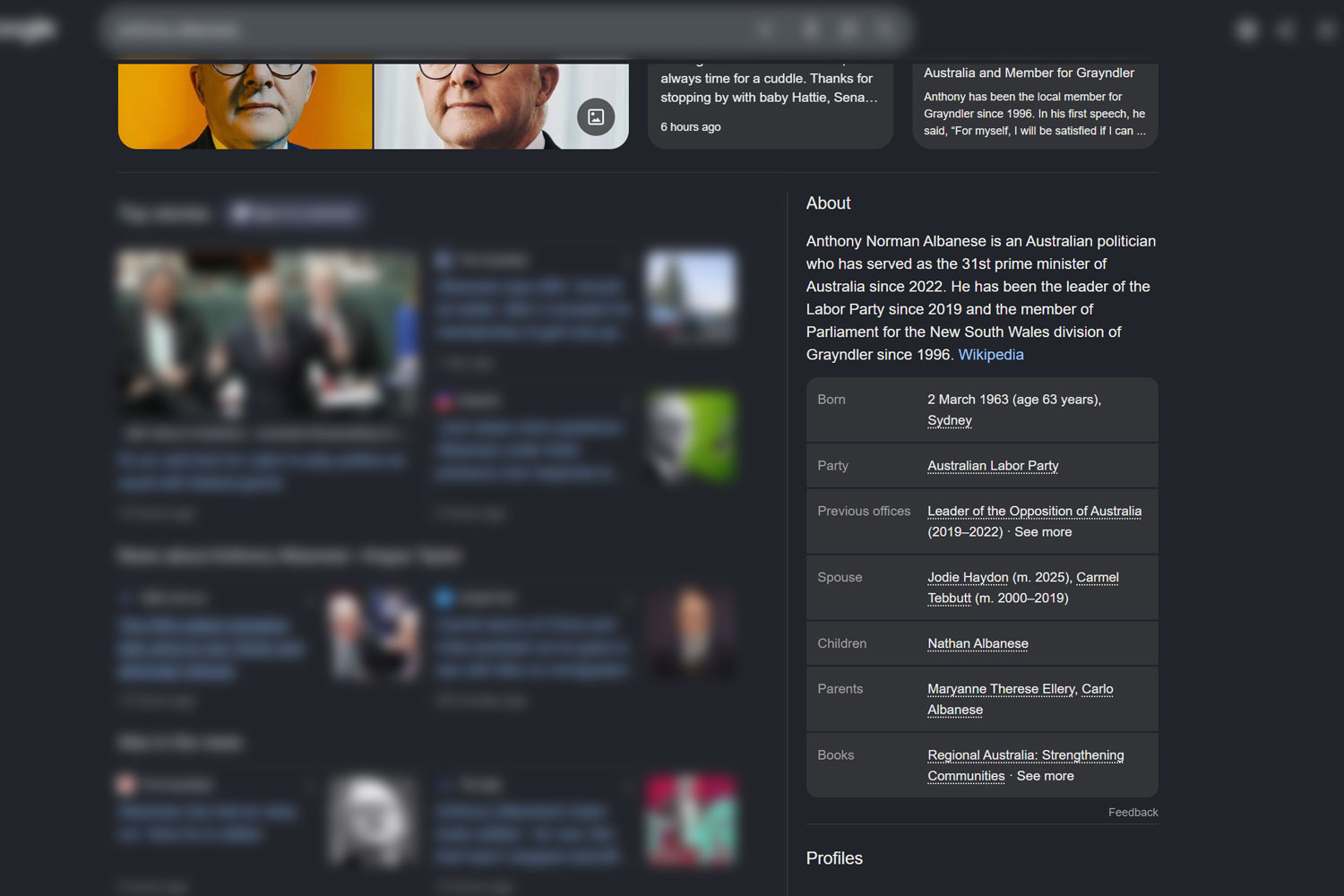
Knowledge Graph and knowledge panels are related but distinct concepts. Knowledge Graph is a database that underpins various Google Search mechanisms. Knowledge panels, on the other hand, are a SERP feature – information about people, places and things that Google surfaces natively in its results. A knowledge panel normally includes a short description of its subject, as well as facts like age and net worth, all of which are informed by the subject’s Knowledge Graph entity.
How Knowledge Graph Affects Search Performance
When someone types a search phrase into Google – like ‘digital marketing gold coast’ – Google uses a few different mechanisms to understand it. One of those mechanisms is lexical search (keyword matching). Another is transformer models like BERT, which use vector embeddings to infer semantic meaning. A third: Knowledge Graph.
While the exact mechanism hasn’t, to my knowledge, been explicitly confirmed by Google, Knowledge Graph is most likely used as a sort of ‘anchor’ for transformers. Vector embedding tends to yield fuzzy results that aren’t always accurate – especially when search queries are head terms that lack the additional context of long-tail keywords.
QRef
A system called QRef (query reference) probably helps correct semantic confusion by interpreting the query against Knowledge Graph and annotating it with appropriate entity information. Those QRef annotations even receive a confidence score between 0 and 1 that probably informs the diversity of entities surfaced in response to the query – a low confidenceScore would likely yield results covering multiple, lexically similar entities, with systems like NavBoost then helping to refine results over time. QRef also considers related entities (likely entities that share an edge with the annotated entity) and ‘cluster siblings’ (which are probably entities in the same topical cluster that don’t necessarily share an edge).
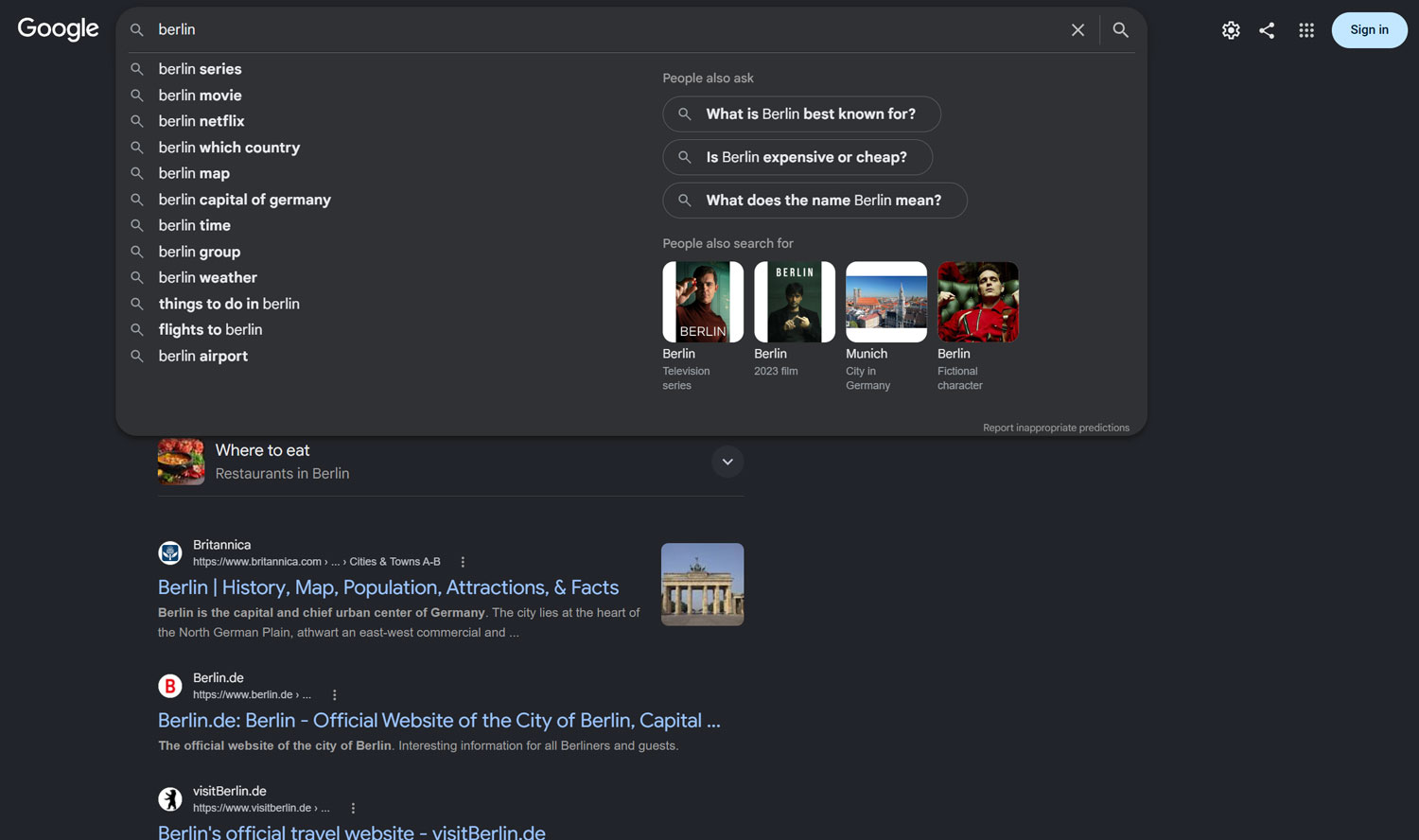
Here’s an example. Type ‘berlin’ into Google. You’ll almost exclusively see results for Berlin, the capital city of Germany, not any of the other entities also named Berlin. In the ‘People also search for’ section, though, we can see other entities appearing – Berlin (the TV series), Berlin (the film), Berlin (the movie character), and Munich (an entity closely related to Berlin the city). QRef is the mechanism that cleanly returns those separate entities and understands that most searchers will mean the German capital city when they type in ‘Berlin’.
WebRef
The complement to QRef is WebRef (web reference), a system that entity-matches documents like web pages against Knowledge Graph. WebRef uses multiple signals, with some of the most significant being topicalityScore and confidenceScore.
topicalityScore, for example, provides an overall score measuring how related the entity in a search query (as determined by QRef) is to the overall topic of a document. confidenceScore is related, but slightly different – it measures how confident WebRef is that an entity is present in a document, based on the mentions of the entity within the document. Offhand lexical mentions, for example – like me using Anthony Albanese as a knowledge panel example earlier in this article – might result in a very low confidenceScore, as might implicit mentions (such as ‘prime minister of Australia’). confidenceScore is also affected by where mentions occur; mentions in titles and H1s hold far greater weight than a footer mention, for example.
Together, those various scores allow Google to accurately match highly relevant web pages to search queries. (I should note that it isn’t exactly clear when WebRef actually impacts search results. At the initial candidate retrieval phase, when 1,000 sites are returned for consideration? Or during re-ranking, when those sites are ordered based on various signals? Based on the signals used, it seems likely that WebRef works at both stages, although I haven’t found any evidence supporting its use during re-ranking.)
Impact on AI Features and Gemini
Based on documentation from Google, Knowledge Graph is used to ground AI Mode queries during RAG. That’s as much as I’ve been able to confirm. While some documentation referencing Gemini Enterprise and Knowledge Graph exists, it seems as though Gemini Enterprise mostly uses Knowledge to better understand queries (and thereby return higher-quality responses) rather than ground responses per se.
With that said: absence of evidence isn’t evidence of absence. It’s quite possible that Gemini uses Knowledge Graph to validate entity attributes and information in the same way that AI Mode (which is just a custom version of Gemini) does.
Knowledge Graph’s Relevance to SEO
Knowledge Graph is directly relevant to SEO in 2 ways:
- Understanding its mechanisms mean you can better structure your pages around entities.
- Creating a Knowledge Graph entity for your brand or product gives you a substantial competitive edge.
Structuring Pages Around Entities
Taking an entity-based approach to writing web pages has been best practice for a long time. Ideally, your pages should be segregated under a MECE structure and grouped as part of a topical cluster. That means each page will have a clearly defined topic that maps cleanly to a given entity.
It’s also a good idea to:
- include explicit mentions of the target entity in your page title, H1, and URL
- avoid going ‘off topic’ – even if you cover your main topic comprehensively, unnecessary deviations may impact your topicalityScore
- if you do cover other entities in the document, make sure they relate closely to the central entity
- ensure your content authors and/or reviewers are demonstrated experts in the target entity.
Getting Embedded as a KG Entity
At a basic level, getting your brand or product embedded as a Knowledge Graph entity means you’ll take up more real estate in the SERPs. Knowledge panels are big, unmissable and, currently, aren’t being shouldered aside by AI Overviews or ads. That gives you a clear advantage over competitors – and improves your brand credibility.
We also know that Google’s AI Mode uses Knowledge Graph to ground its responses. That means having a KG entity will likely increase your chances of being actively recommended/referenced in AI responses. (It’s also a bit of a self-fulfilling prophecy – to make it into Knowledge Graph, you need to have lots of third-party coverage, which means you’re substantially more likely to be included in Gemini’s training data anyway.)
How to Check Your Knowledge Graph Entity
To see whether your brand is an entity in Knowledge Graph, you’ll need to follow the below steps.
- Create a Google Cloud account.
- In Google Cloud Console, set up a new project (for example, ‘BRAND Knowledge Graph’) and enable the Enterprise Knowledge Graph API.
- Make sure you have a billing method set up; API calls cost money.
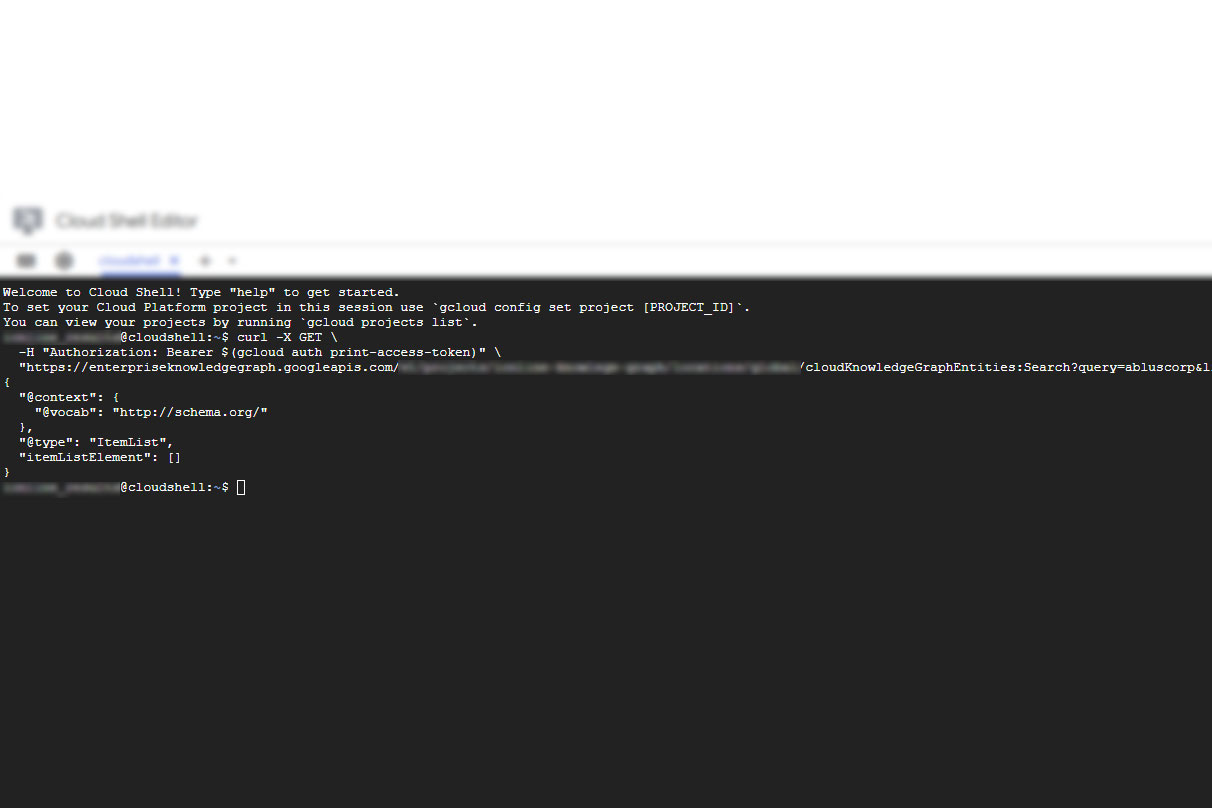
- In your project, open the Cloud Shell terminal (the little box in the top-right corner with the ‘>_’ symbol) and run a search command.
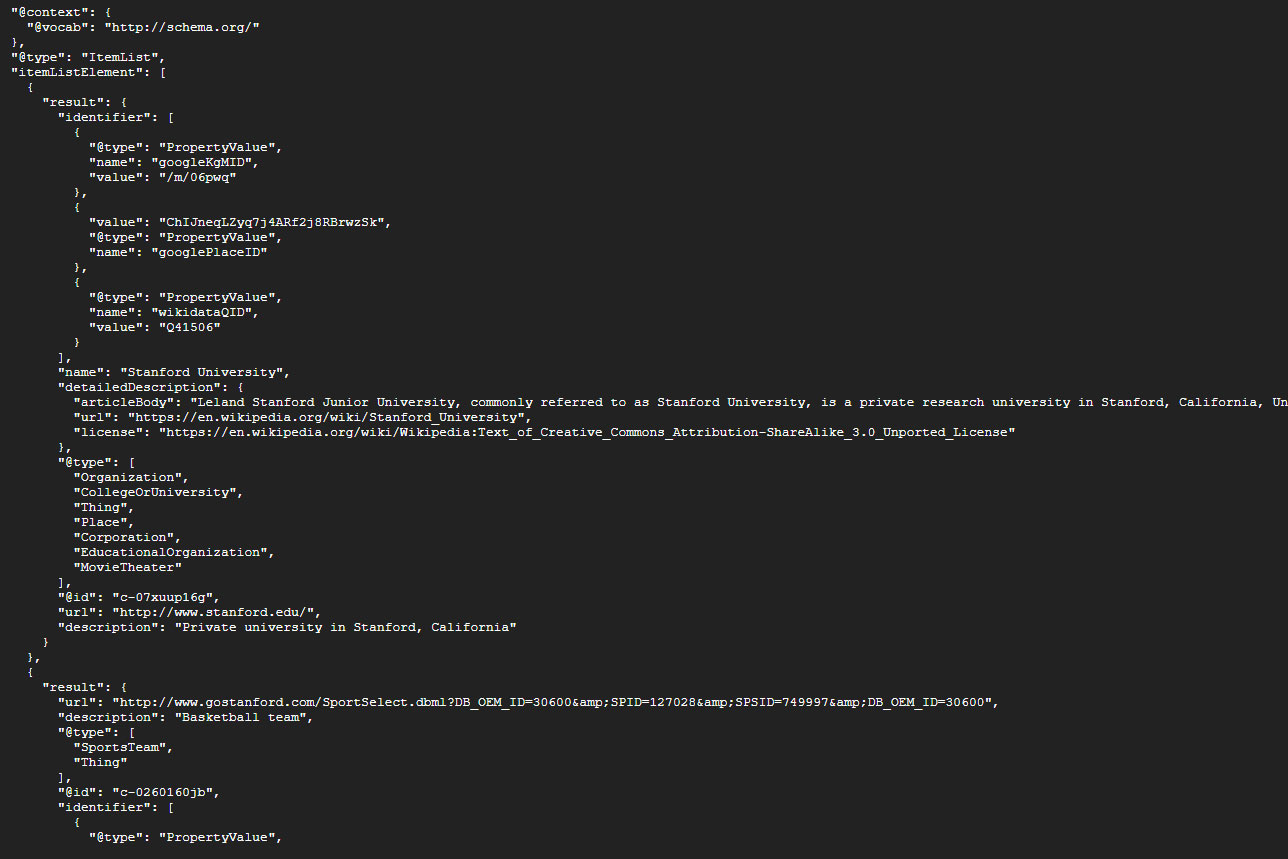
The command should return one of 2 things: either a list of associated entities (each entity will be indicated by “result”: { schema) or a blank result, which indicates the search has found no associated entities.
How to Create and Strengthen Your Knowledge Graph Entity
I should note that creating a Knowledge Graph entity for your brand is far from easy. It requires the kind of multi-year investment that’s most suitable for large national or multinational brands – not local businesses.
Schema Markup
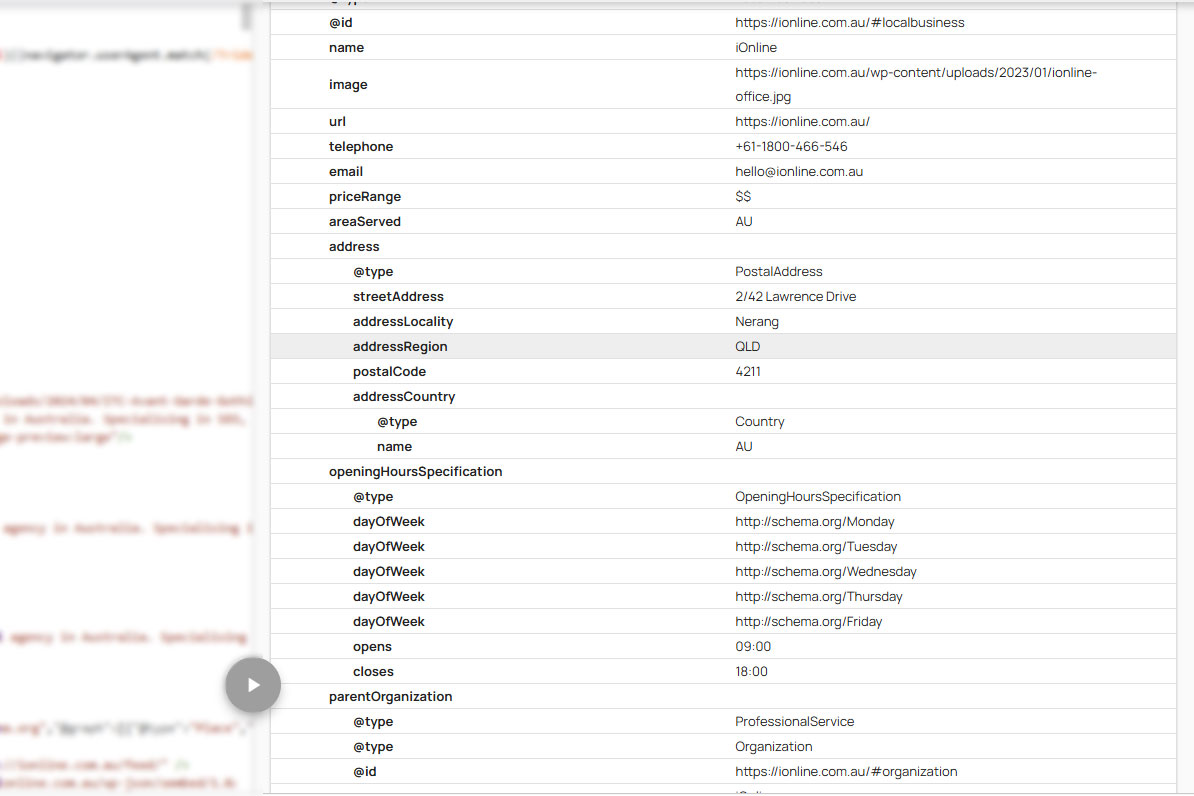
Schema markup is a type of structured data. You can add it to your web pages to explicitly label entities in a machine-readable way, which means systems like WebRef can interpret your site more reliably. If your site is built on WordPress, use a plugin to add it each page’s header, then validate it using the official schema markup validator.
Keep in mind that adding schema is useful for helping Google understand your site. It’s not a ranking factor for traditional or AI search.
Google Business Profile
When you create a Google Business Profile, it automatically generates a Google Place ID, a unique identifier that’s used in the Google Places database and on Google Maps. Importantly, that ID is often referenced as a Knowledge Base entity attribute, which means Knowledge Base is almost certainly being fed by Google Places.
While creating a Google Business Profile isn’t sufficient to generate a Knowledge Base entity, it is a useful first step – and has many other benefits, especially for local businesses. It’s also worth creating Bing Places for Business and Apple Business profiles.
Entity Coherence
Once you’ve added schema to your website and set up business profiles for Google, Bing and Apple, make sure your brand has consistent information across your entire digital footprint. Start with your NAP information – name, address, and phone number – then focus on your offerings and business description. One basic tactic we recommend, for example, is using a standardised business description – a kind of 2- to 3-sentence elevator pitch that includes your business name, your category, your ICP, the outcomes you deliver, and several differentiators.
Make sure that information is identical across your:
- business profiles
- social media profiles
- local directory listings
- vendor aggregation and review platforms
- any other online references, such as author bios.
Entity coherence is important for your brand and SEO generally, but it’s particularly critical for getting into Knowledge Graph. We know that entities are derived from multiple sources, which probably includes publicly available sources that have been submitted to Google – muddy information about your entity could result in an incorrect KG entity or, more likely, exclusion from KG entirely.
Digital PR
You have a strong website with schema markup, multiple business profiles, and a consistent digital footprint. The next step: broaden that footprint by building references from reliable, independent sources.
It’s not a journey to embark on lightly, especially given most of your outreach attempts will fail. Editors at publications of size typically get dozens to hundreds of pitches per week and aren’t normally inclined to run puff pieces on brands. You’ll need a good story to pitch, which will likely involve undertaking original research of some kind – or doing something notable with your brand (even harder). Cultivating relationships with journalists and editors in your niche is also worth investing in; you’ll improve the chances of your pitches actually getting opened, and you’ll get more visibility into the kinds of topics they’re interested in covering.
Wikidata
The holy grail of Knowledge Graph optimisation is creating a Wikidata item for your brand. Wikidata items are, after all, directly referenced in KG and used to build out KG entities. While inclusion in Wikidata doesn’t guarantee a KG presence, it does make it extremely likely – there are around 123 million items in Wikidata, and more than 54 billion (yes, with a ‘b’) entities in Knowledge Graph.
To get into Wikidata, you’ll need to prove your brand is notable. That means you’ve been described by multiple ‘serious and publicly available references’, which typically translates to third-party media coverage. Keep in mind that this is an extremely high bar to reach – you can’t simply accrue a few brand mentions and land a Wikidata item. For context, very large, well-known brands like McKinsey, HubSpot and Asana have pages. Most lesser-known companies don’t, because they aren’t genuinely notable entities. (And, no, you shouldn’t try to get listed without meeting notability criteria. It’s a waste of time that carries potential repercussions.)
So, if your brand isn’t likely to be included without a serious change in scale, what can you do? One option: try to get you or your senior people included instead. It’s much easier to get a person listed than a brand, especially if you’ve built up a public profile through things like conference presentations, book or research publications, or serial entrepreneurship.
Takeaways
Google’s Knowledge Graph is a foundational component of modern search. It’s also one of the least accessible – force-creating an entity requires persistent, high-calibre digital PR and technical hygiene. Those competitive moats mean that, if you do put in the work, your brand will have clear and enduring advantage over rivals in both traditional and AI SEO.
So start now. Add schema to your web pages. Make sure your brand is consistent wherever it appears online. And think about the benefits that things like a strong founder brand and original research bring – even if a Knowledge Graph entity isn’t on the horizon for you, those activities are still very much worth investing in.