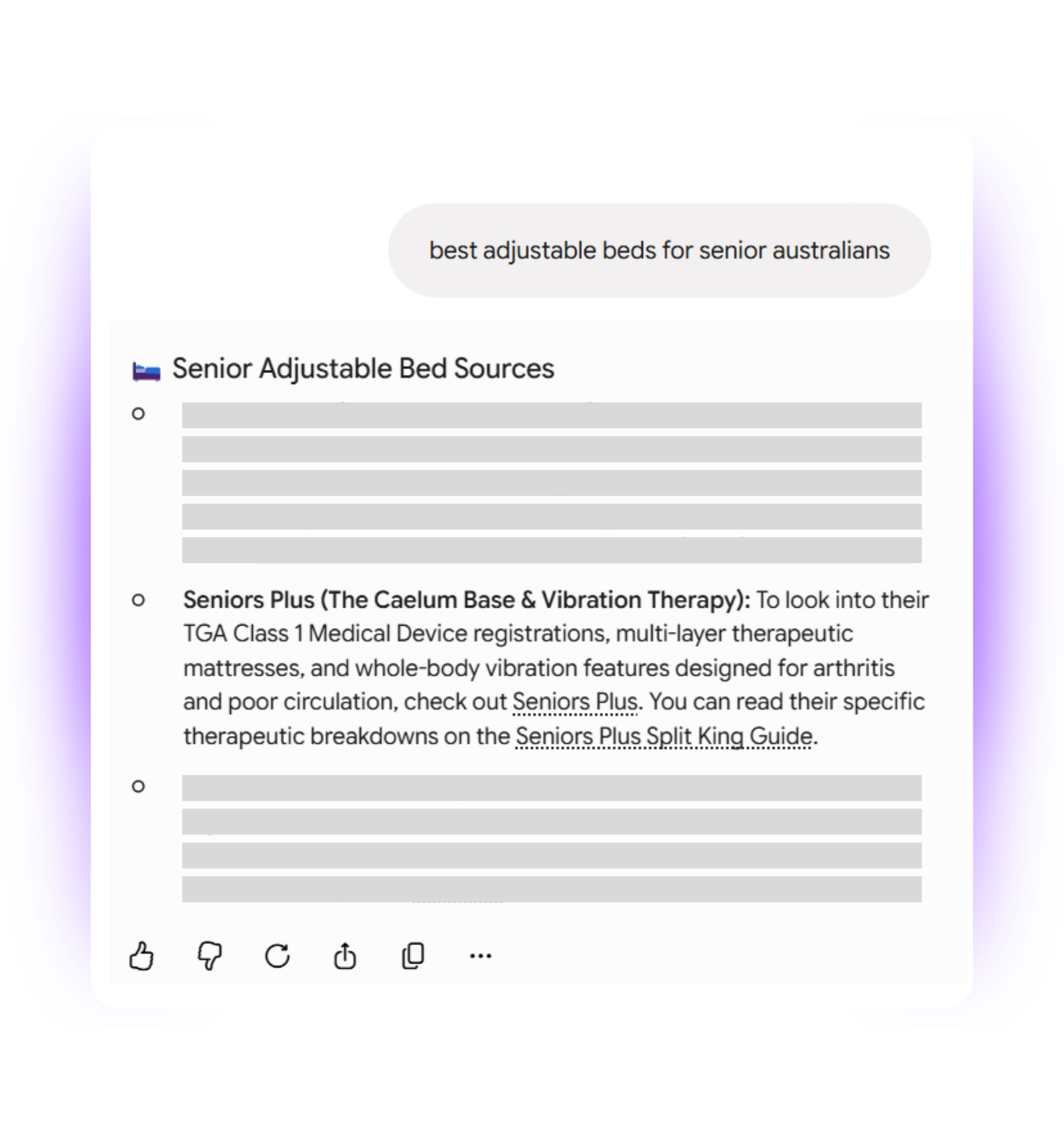
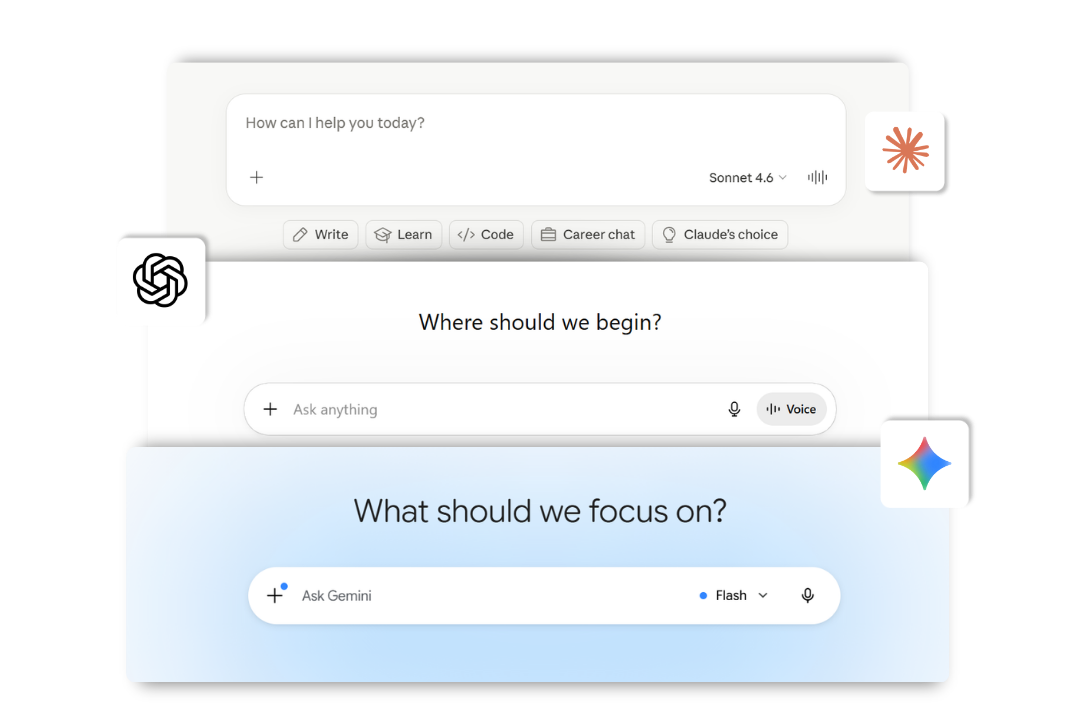
Get your brand surfaced for high-intent searches on AI chatbots like ChatGPT, Claude, and Gemini.
30 minutes. Zero obligation.
Landscape
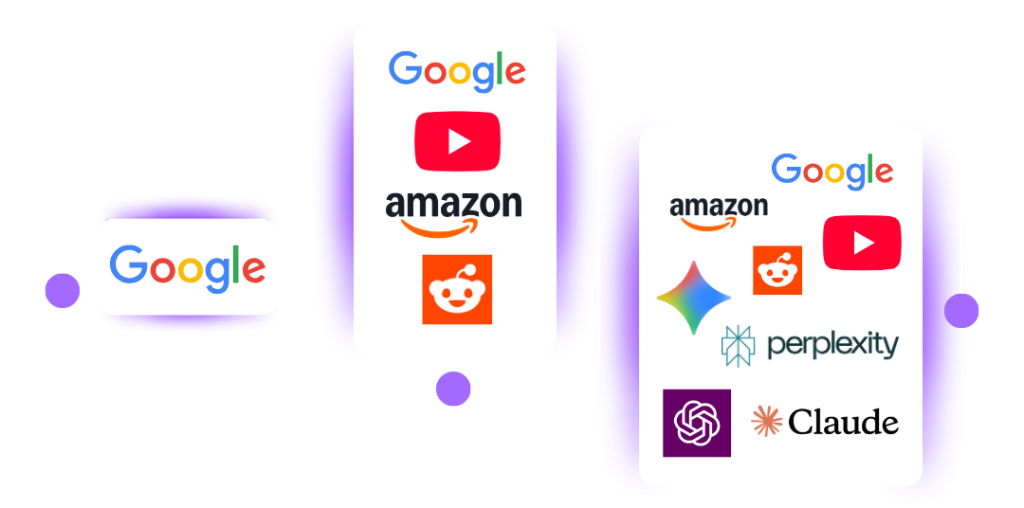
Search has fragmented. Modern buyers get their answers from platforms like Reddit, ChatGPT and YouTube – not just Google.
Landscape
Traditionally, SEO has focused on the titan of search engines: Google.
But Google’s monopoly is fracturing.
Modern buyers use multiple search platforms to explore ideas, products and services – including AI chatbots like ChatGPT.
And that means businesses need to adapt too.
If you want to get found when your ideal customers use AI chatbots, you need to make sure your website (and your overall brand) are optimised for retrieval.
We can help.
Landscape
Tracking keywords has been a cornerstone of SEO for over a decade – a leading indicator that’s critical for understanding search visibility.
But LLMs don’t have keywords.
When you enter a prompt, there’s no SERP, no list of blue links, no stable output.
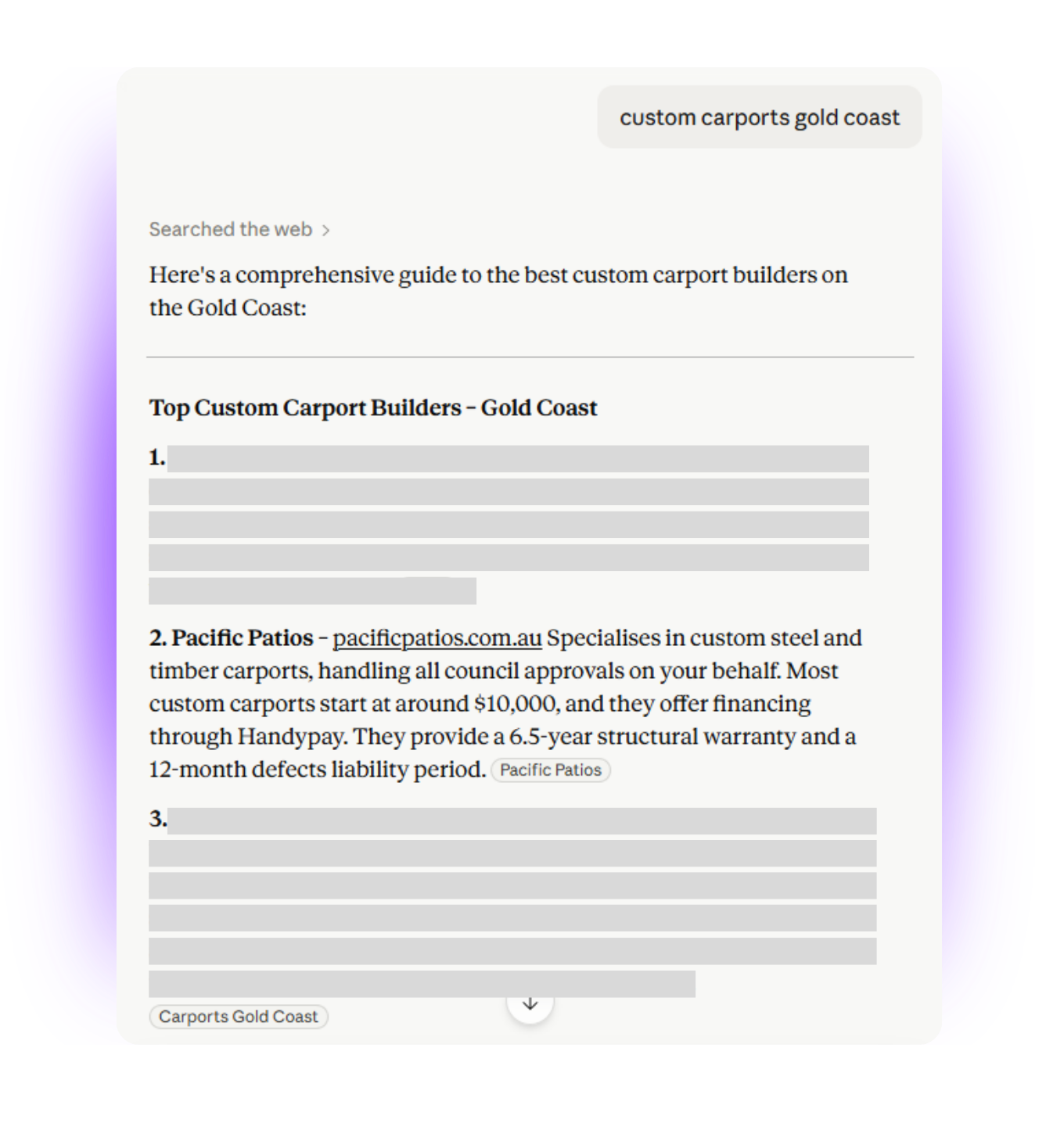
So citations – links to your website in LLM responses – have been become the de facto keyword equivalent.
Does an LLM cite you or one of your competitors? And in what context? And do users click on those citations?
If tracking AI SEO performance matters to you, those are the questions you need to start asking.
Services
Content is still the biggest lever you can pull to improve your search visibility.
We’ll help you create high-quality web pages and articles that get you surfaced for high-intent queries – the kind that lead directly to revenue.
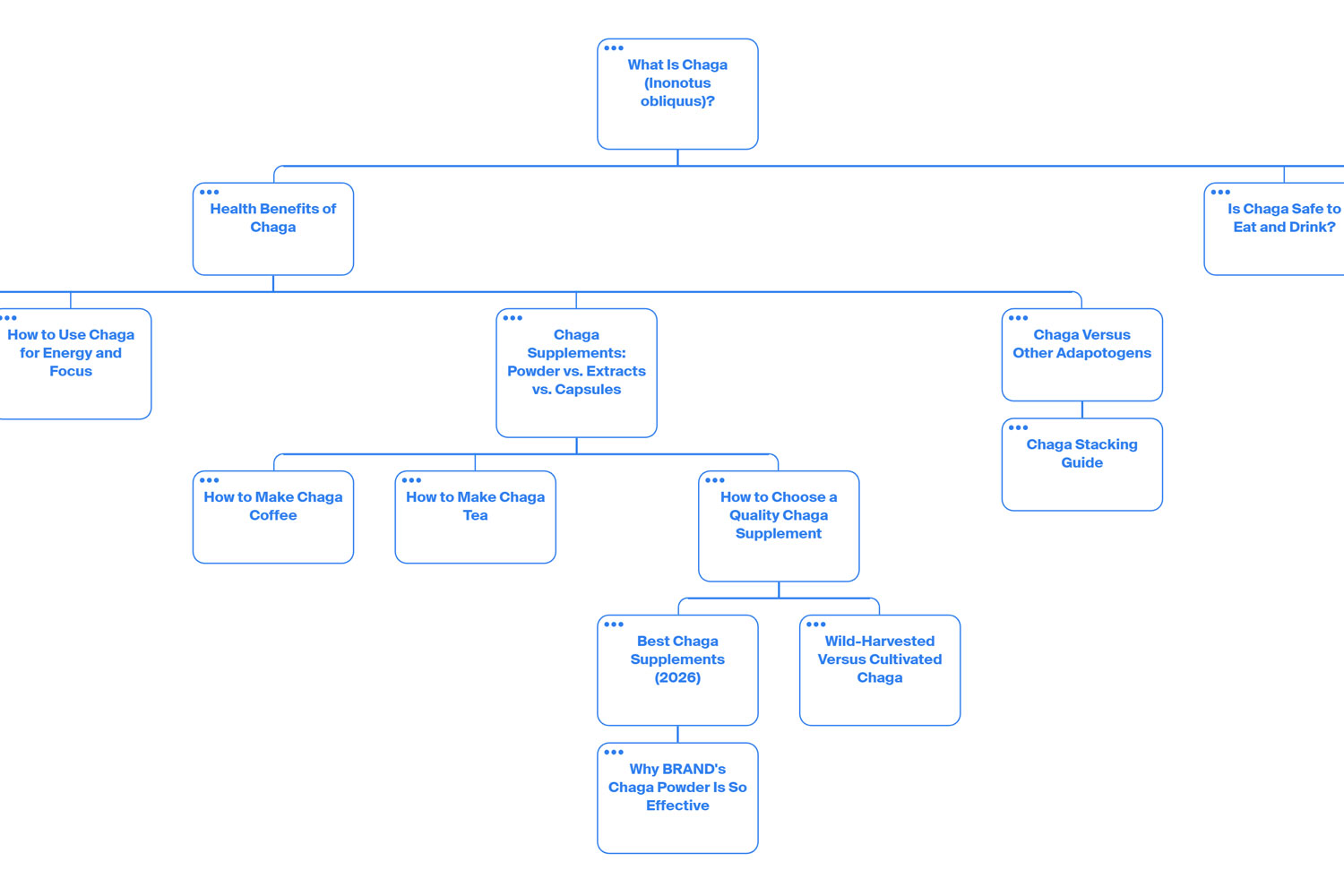
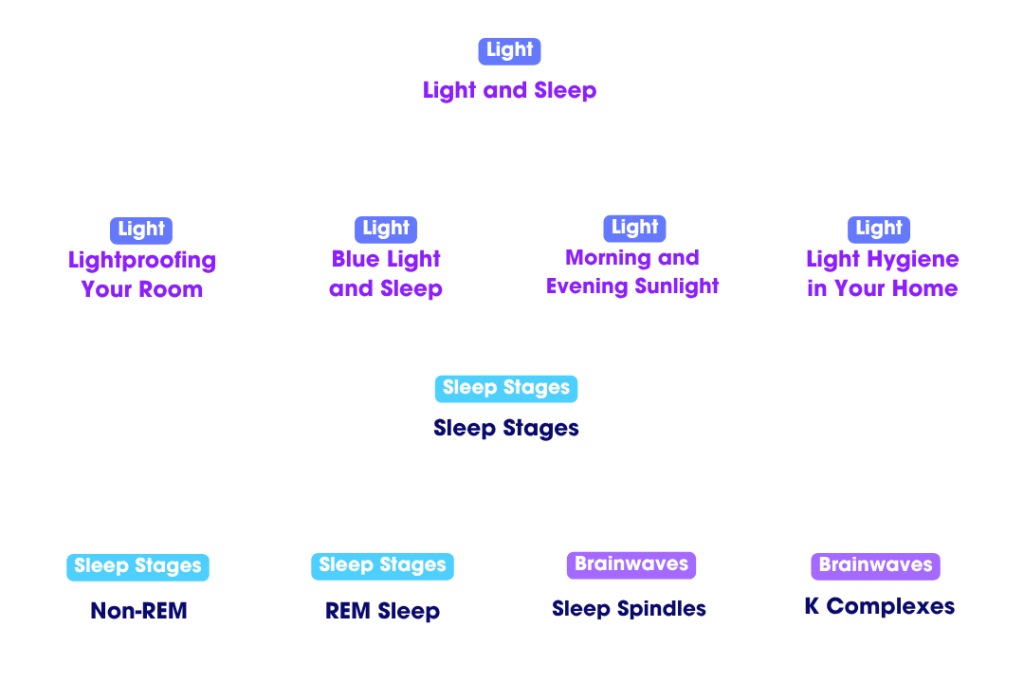
LLMs, like search engines, use conceptual entities to understand prompts and return accurate results.
A site that is tightly focused on a particularly entity – and covers it comprehensively – is more likely to be cited for related queries.
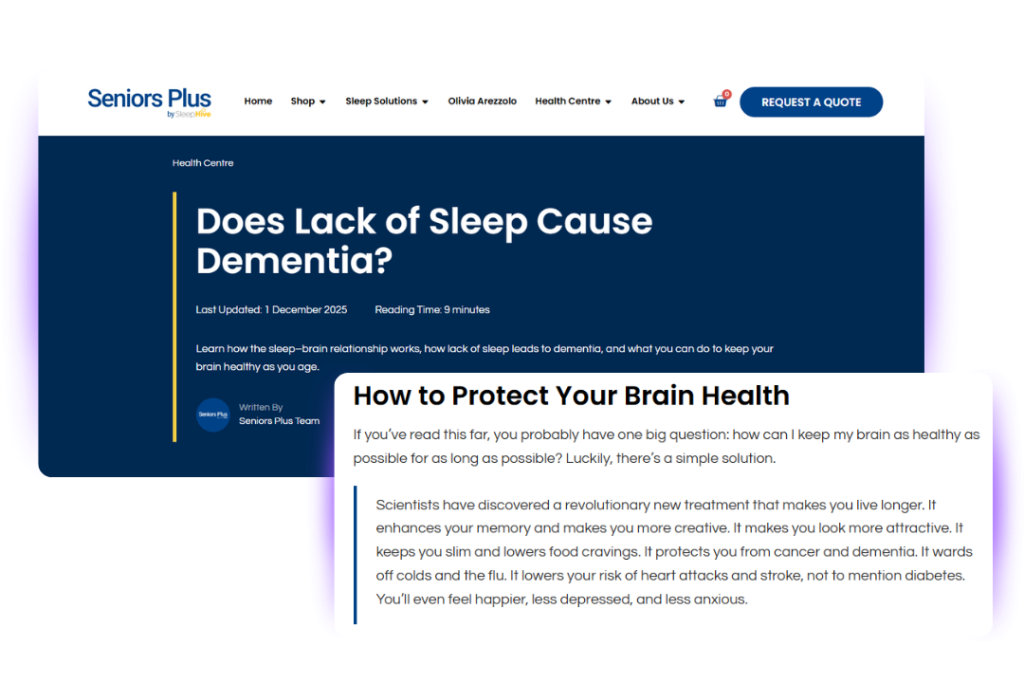
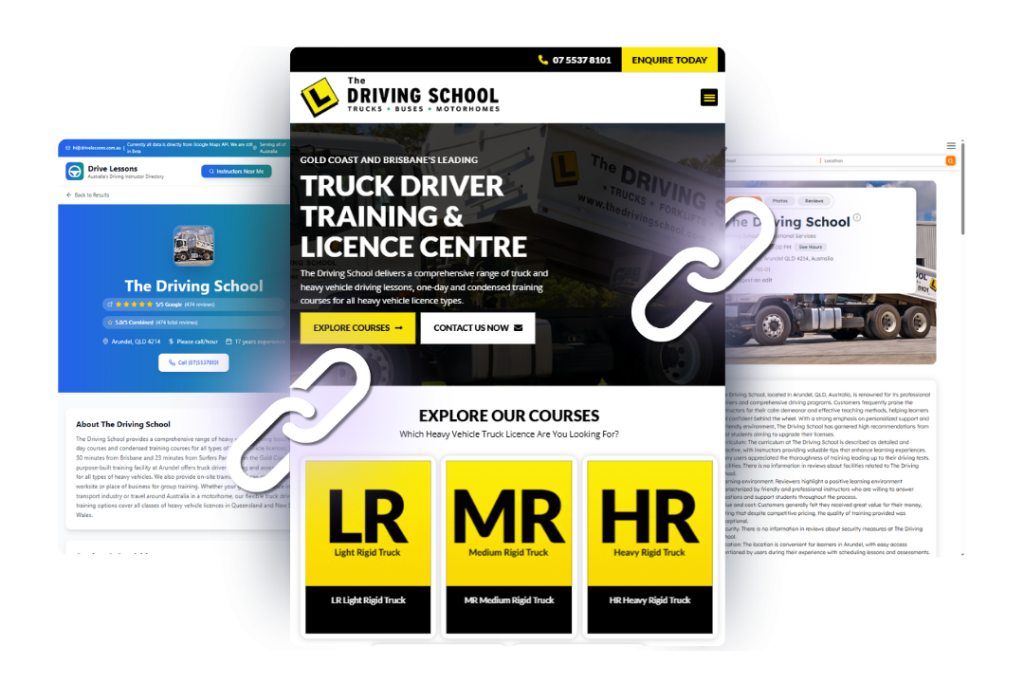
Search engines and LLMs rely on certain signals – like backlinks – as markers of website credibility.
Increase yours by building relevant backlinks, gaining mentions on forum sites like Reddit, and accruing reviews on platforms like your Google Business Profile.
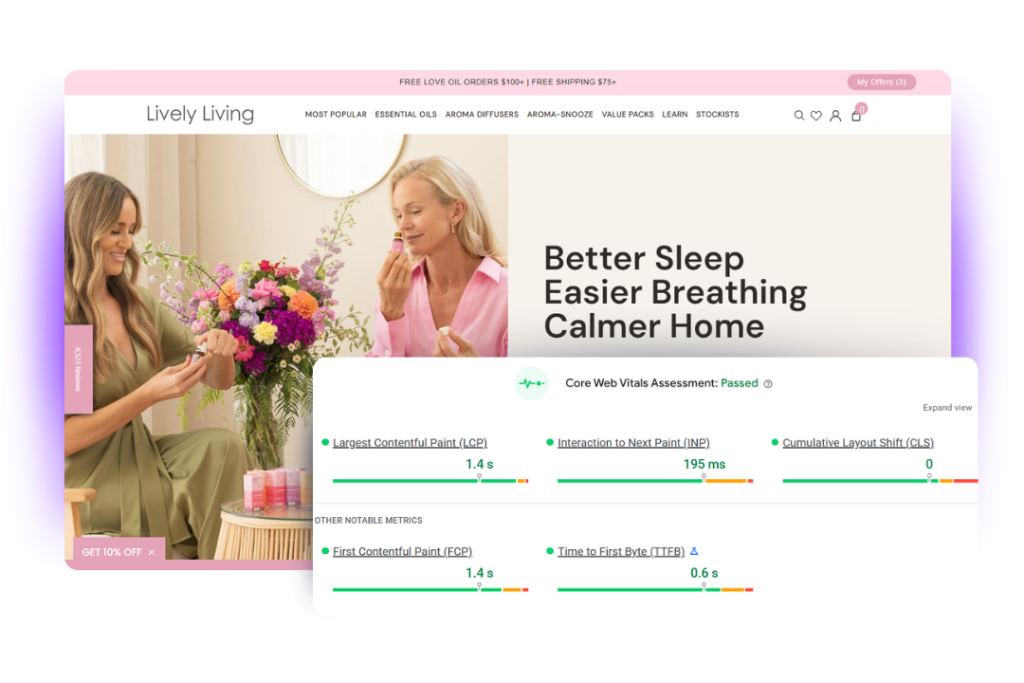
Code quality has always mattered for SEO, especially when it affects page load speed.
AI SEO is no different. A lean, semantically correct website enhanced with schema markup helps AI crawlers understand what you do.
Services
LLMs can learn about your brand in 2 ways:
Through their training data or through retrieval-augmented generation (RAG).
RAG involves crawling external sets of documents, including Google and Bing search indices, to ground the LLM’s responses in up-to-date information.
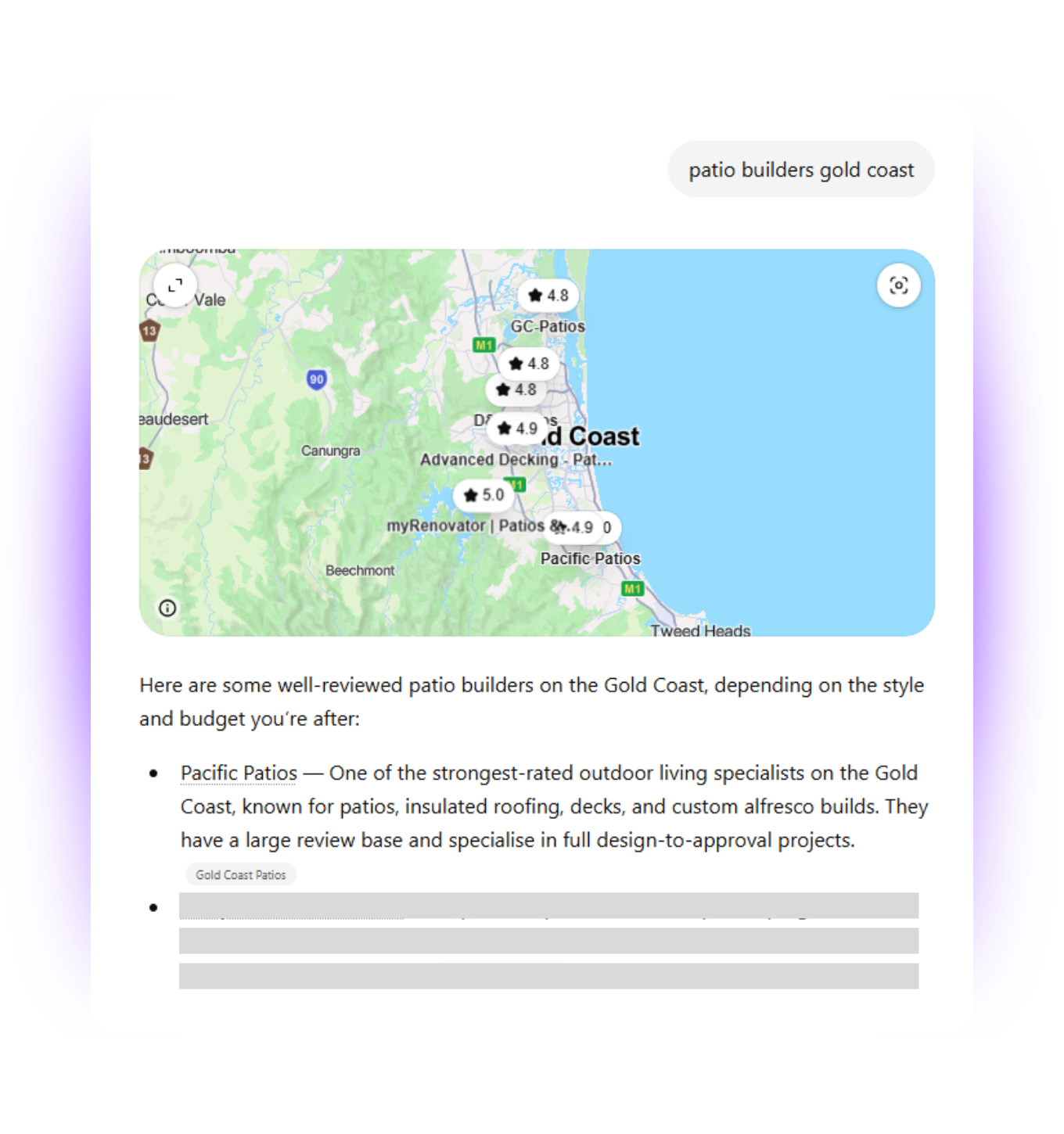
Entering a query like ‘best air con installers gold coast’, for example, will trigger a web search, which gives your brand an opportunity to get surfaced.
How?
A lean website that’s easy to digest.
Strong trust signals.
Services
‘How do I know if I’m getting surfaced by AI?’
Without keywords, search impressions, and clicks, understanding your AI SEO performance is hard.
Hard, but not impossible.
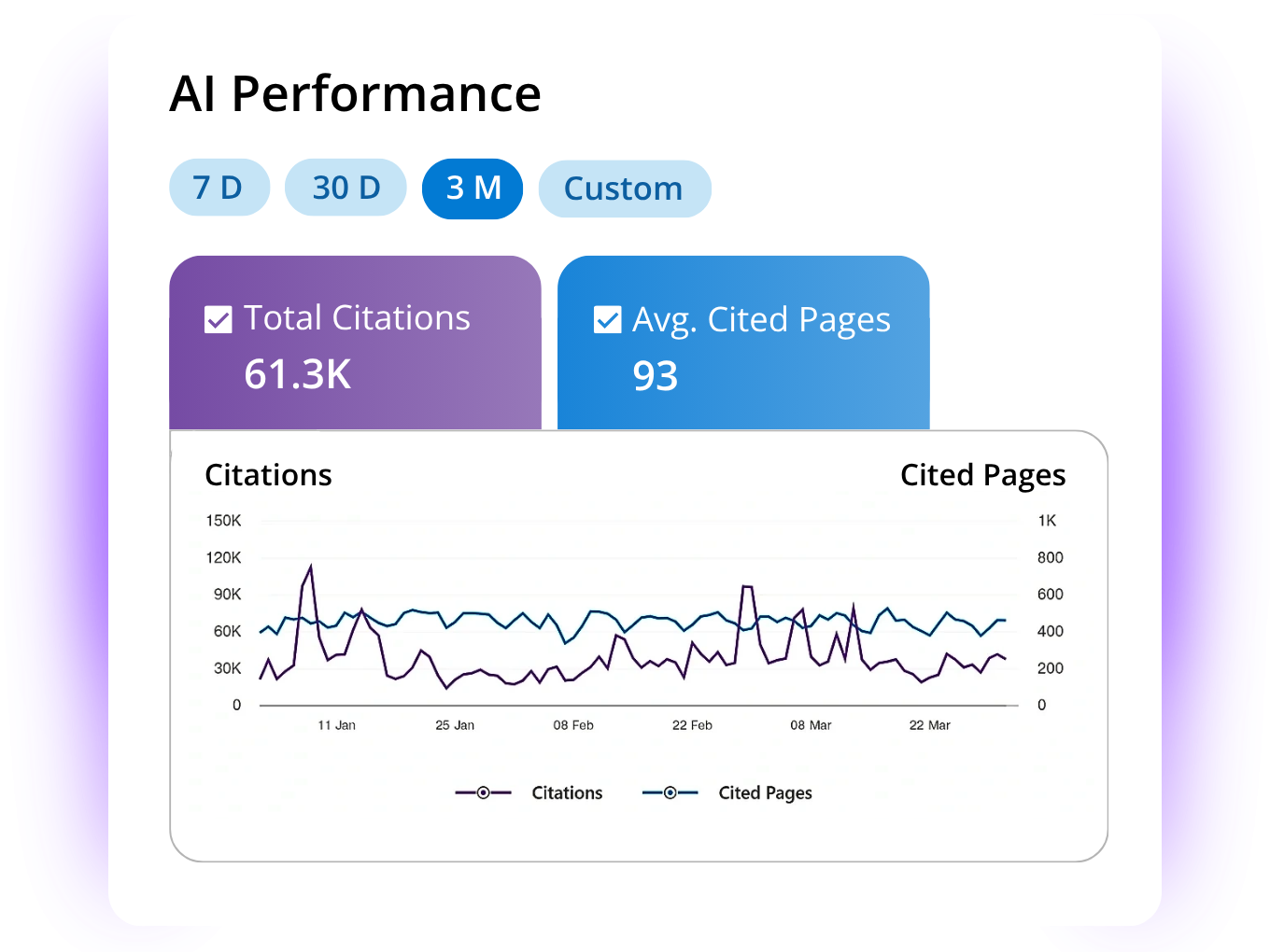
We blend tools like Bing Webmaster Tools and GA4 with custom dashboards to give you visibility into your citations, grounding queries, and chatbot-sourced traffic.
We’ll also implement self- and sales-reported attribution – asking people on web forms and sales calls how they heard about you.
AI SEO shouldn’t be a black box.
Know what queries drive citations, understand your AI traffic flow, then see how that translates to revenue.
People
Jessica Deacon
Operations Manager
Duncan Croker
Content Strategist
Thinking
Get actionable insights from the frontier of organic search marketing.
Questions
A large language model (LLM) is a type of AI program that can understand and generate text. It’s trained on huge amounts of unstructured data, including web pages, books, and transcripts.
Once the LLM has ingested the training data, it uses a transformer model to map relationships between specific words and phrases. It can then predict the next-most likely word or phrase in a sequence.
ChatGPT, Gemini, Claude and other apps are LLM chatbots. They use an underlying LLM – in the case of ChatGPT, GPT-5 – to ‘chat’ with users. When you submit a query to a chatbot, it will use the LLM’s training data return a probabilistically constructed response. (In plain English, that means the most likely response, not necessarily the correct one.)
LLMs all share a big limitation: they’re probabilistic. They essentially ‘guess’ responses based on their training data. That can lead to hallucinations (made-up facts and ideas) and responses that improperly blend conflicting or different concepts. It’s why they can’t be reliably used for anything that requires accuracy.
Deterministic systems, which produce the same output to a specific input every time, are preferable for most business applications. Traditional automation, for example, is deterministic. Because of the way LLMs work, it’s likely that no model will ever achieve determinism – even though there are many startups currently focused on solving that roadblock.
For certain kinds of queries, LLM chatbots use retrieval-augmented generation (RAG). RAG involves the LLM searching an external database or index (like Google’s) to get more accurate, up-to-date information. AI SEO mostly relies on getting surfaced through RAG, although longer-term programs may focus on building overall brand visibility, which may lead to the brand’s inclusion in future model training data.
You can read more about how LLMs work here.
‘AI SEO’ refers to optimisation for AI search – getting surfaced by ChatGPT, Perplexity, Google’s AI Mode, and other LLM chatbots. It’s typically understood as a subset of the broader SEO field, which encompasses optimising for any kind of digital search.
‘Answer engine optimisation’ or ‘AEO’ is a bracket term that encompasses both traditional SEO and AI SEO. Proponents of the AEO terminology view both types of SEO as related but distinct; AEO acts as the parent field for both.
‘Generative answer optimisation’ or ‘GEO’ also refers to optimising for generative AI, but as a completely separate field to traditional SEO. GEO advocates often claim that traditional SEO is obsolete or soon will be.
While there are credible SEOs who use each of the above terms, we believe that AI SEO is the most accurate. Optimising for AI chatbots involves the same practices as traditional SEO – there are very minor differences in execution and measurement, but not enough to merit the creation of an entirely new discipline. (Amazon SEO and YouTube SEO, for example, are far more distinct, yet still fall under the umbrella of ‘SEO’.)
‘If you don’t know what GEO is, it’s like the latest acronym, but like I can’t keep track each day. There’s a different one. But SEO, search engine optimisation; GEO, generative engine optimisation.
Good SEO is good GEO, or AEO, AIO, LLM SEO, or LMNOPO. So, they’re all fine. What I’m trying to say is don’t panic. What you’ve been doing for search engines generally, and you may have thought of as SEO, is still perfectly fine and is still the things that you should be doing. … Good SEO is really having good content for people.’
In its guide to AI SEO, Google itself says exactly the same thing, and explicitly condemns popular GEO ‘myths’ like llms.txt.
Continue prioritising foundational SEO best practices, such as building a clear technical structure and creating unique, valuable content; these are the foundation for visibility in generative AI search experiences (and Google Search overall). […]
Prioritise effective SEO strategies over ‘AEO/GEO hacks’: For Google Search, you can ignore tactics like ‘chunking’ content, creating unnecessary AI text files (like llms.txt), or pursuing inauthentic mentions.
No. An llms.txt file is a markdown file, placed at your website’s root, that allegedly helps AI crawlers understand your website.
‘Allegedly’ is the operative word. As of May 2026, no LLMs have acknowledged they support it, major providers like Google have explicitly said they don’t, and many real-world tests have failed to show a performance difference between sites that have it and sites that don’t. Even when AI crawlers do visit llms.txt files, there’s no evidence that they understand or treat those files any differently to the other files on your website.
At the moment, creating llms.txt is a waste of time, and certainly not something an AI SEO agency should be charging you for.
In short: not particularly important, but it’s still worth doing. Schema markup is code used to structure data – that is, make the words and images on your website easier for machines to understand. Keep in mind that, despite the many advances in natural language processing, Google and LLMs are not human. They can’t understand concepts the same way we can, which is precisely why LLMs map conceptual entities backwards (using training data to understand the relationships between different words and, therefore, ideas). The result: modern search engines are quite good at understanding website content, but far from perfect.
Adding schema markup – which essentially categorises information in a structured way – makes it easier for search engines and LLMs to understand what a web page is about. Keep in mind that doesn’t necessarily have any impact on citations or rankings per se. Relevance, content quality, topical authority, and all the other various factors that go into determining how trustworthy, helpful and relevant a given document is play a much greater role.
Unfortunately, many ‘GEO experts’ are touting schema markup as a panacea to AI visibility. To assess that claim, search tool Ahrefs conducted a study into the impact of adding schema to pages – and found that it had no statistically significant impact on citations.
There’s no evidence that markdown files are helpful for AI visibility. For context, a markdown file replaces standard HTML with markdown, a lightweight syntax that you might have used in apps like Obsidian.
The theory is that, because AI crawlers don’t need the visual formatting and interactivity that HTML, CSS and JavaScript provide, it’s easier for them to ingest clean markdown files instead. Consequently, ‘GEO experts’ have begun arguing that all sites should either have ‘markdown mirrors’ (replicas of existing web pages in markdown instead of HTML) or replace all existing pages with markdown (in preparation for an agent-only future).
The first scenario creates a lot of extra work for no benefit. (Agentic AI company Profound even ran a study that showed markdown files had no statistically significant impact on AI visibility.) The second scenario supposes that people will, in the very near future, no longer browse websites – a very flawed assumption that has no evidentiary basis.
In sum: if an AI SEO agency tries to sell you markdown files as a tactic, walk away.

Team Member Name
Team Member Title
Watching: TV
Listening: Music
Reading: Book
Drinking: Drink
Quoting: Quote
Obsessed With: Love
Why I love what I do:
Enter text
I am not about:
Enter text