

You know backlinks matter for SEO. You know they’re viewed by Google as votes of trust. But you aren’t sure how they affect topical authority – one of the most nebulous concepts in SEO.
This article explores the relationship between backlinks and topical authority, drawing on primary sources like Google patents, search algorithm leaks, and court filings. I’ll also explain how Google systems like T*, PageRank and P* incorporate backlinks generally.
Key Definitions
Backlink: A hyperlink from a document on one website to a document on another website.
Anchor Text: The clickable text in a hyperlink.
Topical Authority: An unofficial umbrella term for how websites rank better for topics they have ‘authority’ in. It is understood to be a sitewide effect, not a page-level one. Topical authority is affected by a number of different factors, including a site’s topical space, its brand entity, its content authors, the kind of sites that link to it, and whether people searching for topically related terms react positively to the site.
How Google Uses Backlinks
Backlinks are one of Google’s most enduring indicators of page quality. Here’s how they’re used across various search algorithms and systems.
T*: Anchors, Body and Clicks
T* (T-star) is a system used by Google to gauge topicality – how relevant a document is to a given query. Most of the evidence available for T* comes from United States v Google LLC, 747 F Supp 3d 1 (D DC, 2024) (‘DOJ antitrust case’), an antitrust case filed by the US Department of Justic (DOJ) in 2020.
On 2 May 2025, a summary of a DOJ call with Google engineer Hyung-Jin Kim was uploaded to the DOJ site. (Full credit to Shaun Anderson for originally surfacing the summary.) It explains that T* comprises 3 fundamental signals:
- anchors, which are links pointing from one page to another
- body, which are ‘terms’ on a page
- clicks, which, historically, has been a measure of how long a user stayed on a page before returning to the SERPs.
Based on Kim’s call alone, it isn’t clear whether anchors reference backlinks specifically or all kinds of links, including outbound links. It’s quite possible that all links are counted – after all, T* measures topicality, not quality – but that backlinks are weighted more heavily thanks to their greater association with page topic. (A web page will often have outbound links that are irrelevant to its topical focus, but is far less likely to have irrelevant inbound links.)
Anchor Attributes
Some additional evidence for anchors exists in the Content API Warehouse leak files, which were made public on 13 March 2024. For example, we know that certain things are measured and may have some bearing on how anchors feed into both T* and other systems like PageRank.
- creationDate measures when an anchor first appears.
- fontsize likely measures the size of the anchor text, possibly relative to other text on the page, with more prominent anchor text possibly conveying more weight.
- sourceType evaluates the quality of the anchor’s source page, with options for high, medium and low quality.
- source is an umbrella for a number of different attributes relating to the source page and probably informs sourceType. Notably, it includes a cluster attribute – which probably checks the source page’s semantic cluster.
- isLocal checks whether the link is from a source page on the same domain or not.
- locality, which does affect ranking and may be related to the site’s local authority (per the NSR modules).
- fullRightContext, fullLeftContext and context2, which evaluate the text surrounding the anchor text and may be used to gauge whether a link is spammy or not.
- text evaluates the anchor text itself.
If those attributes haven’t been deprecated over the past 2 years and if they actually affect ranking in some way, it’s likely that visually prominent, contextually relevant links from high-quality sources in a similar semantic space lead Google to view a page as more topically relevant, which, in turn, may lead to better organic search performance for related queries. Backlinks from sites with a strong LocalAuthority signal may also benefit performance for localised search queries (such as ‘seo gold coast’).
PageRank
Like T*, PageRank is used as a ranking signal. One of Google’s earliest and most well-known systems, PageRank assigns each document in Google’s index a score based on how many (and what kind) of links a document has. That score is then factored into Q*, a top-level signal that scores page and site quality.
Ranking is the second stage of Google’s retrieval pipeline; it’s where all documents that lexically and semantically match a query are culled into a pool numbering tens of thousands. Per court testimony, PageRank likely impacts whether a site is included in that initial pool, especially for queries where the number of lexical and semantic matches is vast.
Those candidate documents are then re-ranked using more sophisticated signals like Navboost, RankBrain, and DeepRank, which order the few hundred pages that users see in the SERPs.
The most relevant component of the modern iteration of PageRank is pagerankNs, a signal revealed in the Content API Warehouse leak. According to its listing in the GDocumentBase module, pagerankNs is ‘a pagerank score for the doc, calculated using NearestSeeds method’.
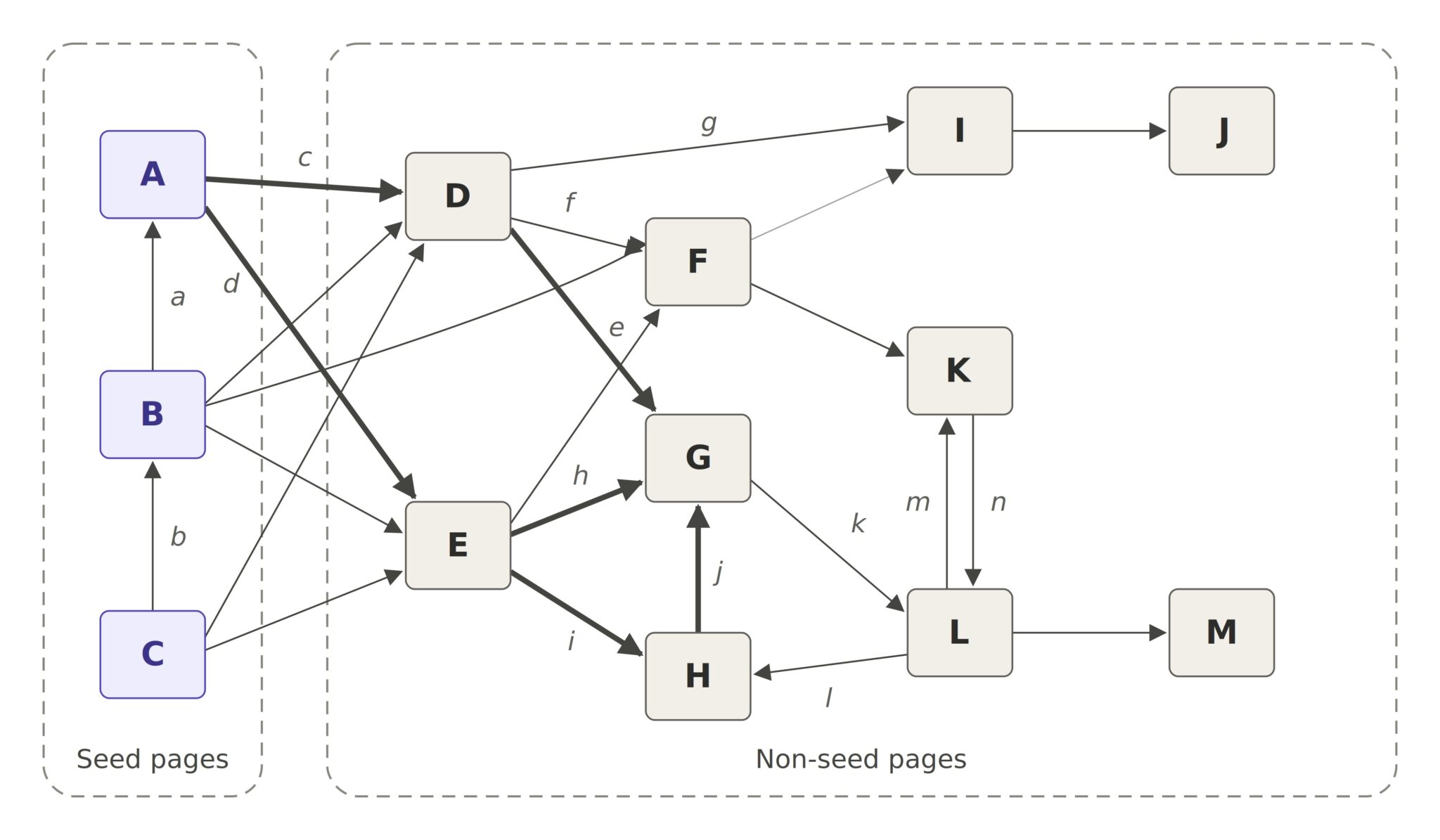
Luckily, a Google patent first filed in 2006 explains exactly what ‘NearestSeeds’ is. That patent, US9953049B1, is for a system that ranks pages based on their link distance from a curated set of ‘seed’ pages. A seed page is a hand-selected page that Google trusts – likely, those from highly authoritative sources like government sites and well-regarded mass-media publications. The shorter the link distance from a seed page to a page on a website, the better-regarded that website page will be.
Based on the patent, pagerankNs isn’t simply a function of the number of hops from Page A to Seed Page B. Each link is probably assigned a length, which may include properties such its position, visual prominence, and the source page’s out-degree (how many outgoing links that page has). That means pagerankNs is much more likely to be calculated based on the total length from Page A to Seed Page B – which aligns with Google’s ongoing efforts to combat link spam that might otherwise manipulate trusted domains.
PageRank and Topical Authority
So, how does PageRank impact topical authority? There’s a theory, espoused by experts like Roger Montti and the late Bill Slawski, that pagerankNs may be topic-specific. A paper cited in the NearestSeeds patent introduces an approach called ‘Topical TrustRank’, which partitions seed pages into topical clusters and then assigns them a trustworthiness score for each cluster. That means a seed page from a well-regarded sports site, for example, would be considered highly trustworthy for pages that relate to sports – but not for pages covering carpentry or makeup. It follows, therefore, that a shorter link distance to seed pages in your niche will improve your page’s performance for topically relevant queries.
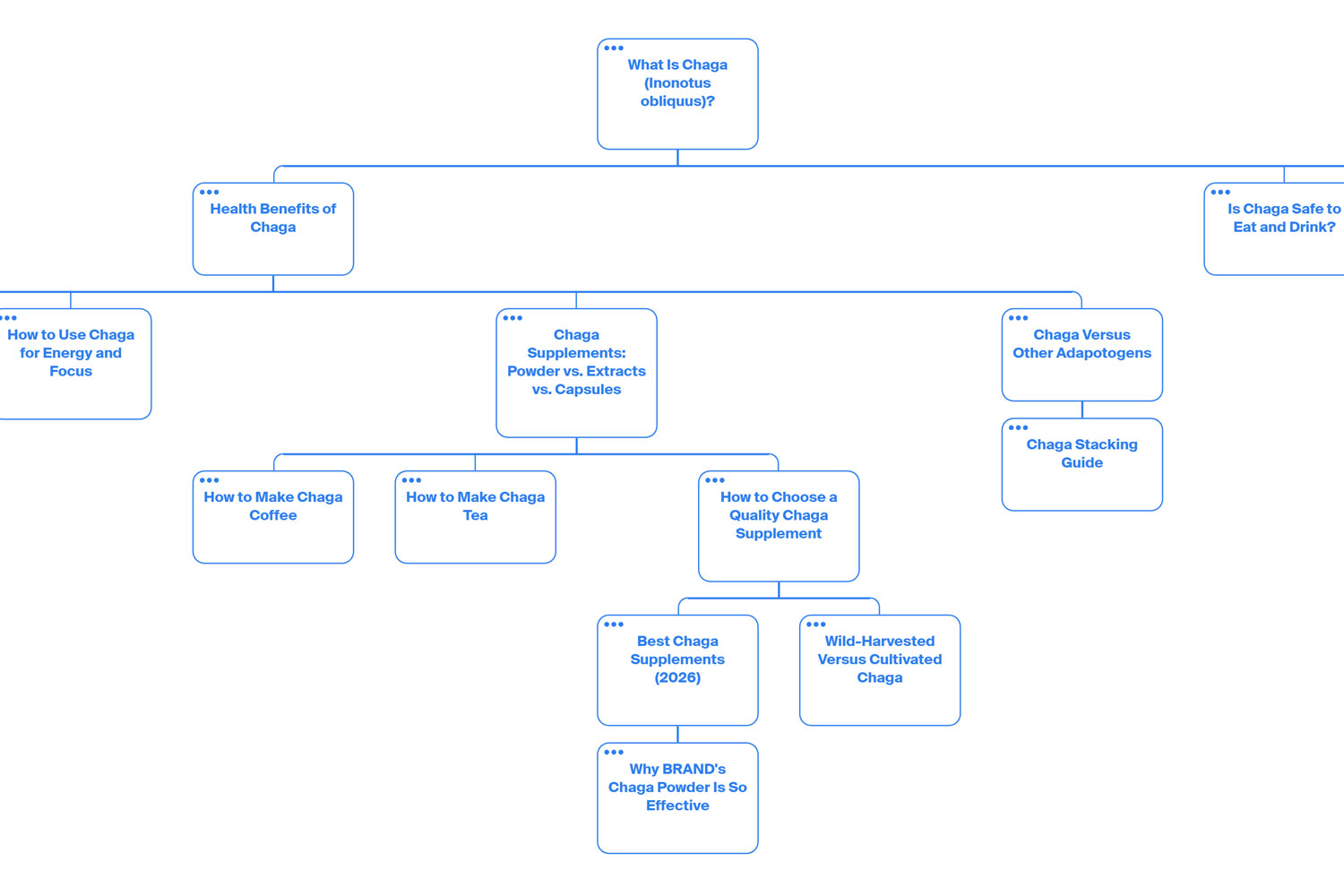
It’s also probable that any topical authority boost is sitewide. An attribute called homepagePagerankNs – also exposed in the Content API Warehouse leak – measures nearest-seeds PageRank for a site’s home page. That value is factored in at the page level, implying that your home page’s proximity to a topically relevant seed page impacts how other pages on your site perform. (And, even if homepagePagerankNs works slightly differently, running internal links from the page that received a backlink to other semantically close pages on your site will pass on the benefits.)
P* (Popularity Score)
The third way that backlinks are used by Google is P*, a keystone signal that measures a site’s popularity. P* is a little hazier than T* and PageRank – most of what we know about it comes from a memorandum opinion from the DOJ antitrust case. (Credit, again, goes to Shaun Anderson for unearthing it.)
According to that document, popularity and quality (Q*) are 2 of Google’s top-level signals (that is, signals that are aggregates of lower-order signals and inform the final ranking of a page). Popularity is probably ‘based on “Chrome visit data” and “the number of anchors,” which is a measure that quantifies the number of links between pages and is used to promote well-linked documents’.
We can assume that some of the same anchor attributes I talked about earlier also play a role here. For example, Google presumably would not class a page as popular simply because it has a high backlink count – those links would still need to come from high-quality sources, be contextually relevant, and so on.
There’s no evidence that P* impacts topical authority.
Do Backlinks Actually Help Topical Authority?
If you’ve read this far, then you should already know the answer: yes, the right kind of backlinks can enhance your website’s topical authority. That happens through:
- anchor text and its on-page context
- the semantic space of backlink sources
- total link distance from your site’s home page to a seed page in the same semantic space.
In practice, the kinds of activities you need to undertake to pull on those 3 levers are the same ones that SEO experts have been recommending for well over a decade. Get links from high-quality sources in the same topical niche as your website, and get them naturally – anchor text should occur in a meaningful context within a page’s body, not be stuffed into link directories or site footers.
Next Steps
A digital PR program is the best way to win backlinks in a consistent way. Publishing high-quality content can also lead to natural link accrual, though, particularly if your brand distributes its content via channels like social media. In most cases, it makes more sense to get a content program up and running first, then invest in higher-cost, higher-risk digital PR to get backlinks and build on the topical authority that the content program has already garnered.
And, if you need help from a partner that specialises in delivering deeply researched content assets, you know where to find us.