
Episode 2
Can’t make it? Register and get the replay sent to your email.
In This Session
Most business owners who aren’t seeing results from their marketing assume the problem is the marketing. Change the campaign. Try a different platform. Spend more. But in the majority of cases, the marketing is doing its job – it’s getting people to the site. What happens after that click is where the money is being lost.
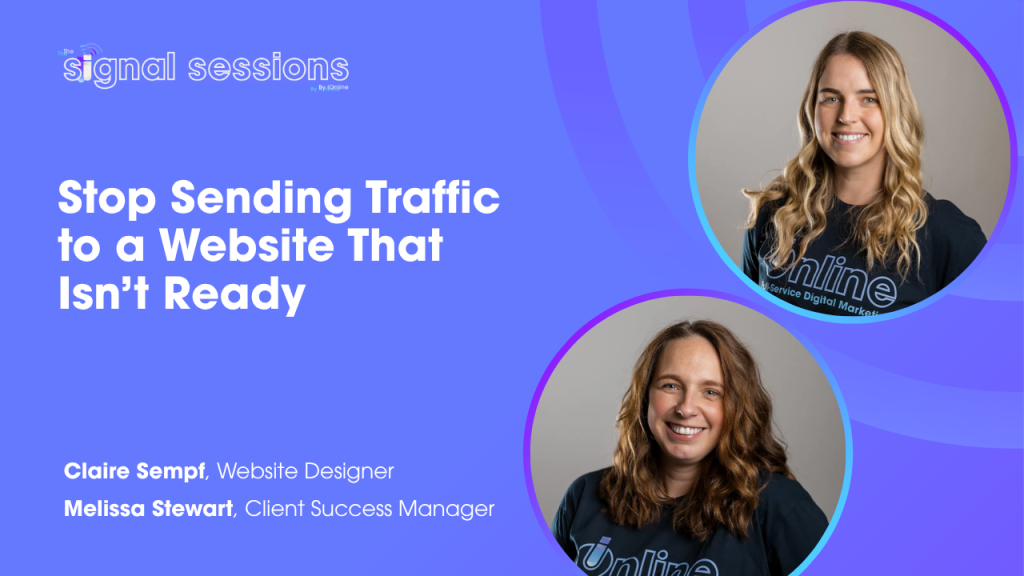
In this session, website designer Claire Sempf walks through the three things that most commonly stop websites from converting. She covers what a website that’s actually ready for traffic looks like, and what a neglected one costs you in real terms.
You’ll leave with a three-question check you can run on your own site in under two minutes, and a clear understanding of whether your website is ready for the marketing spend sitting on top of it.
Introduction
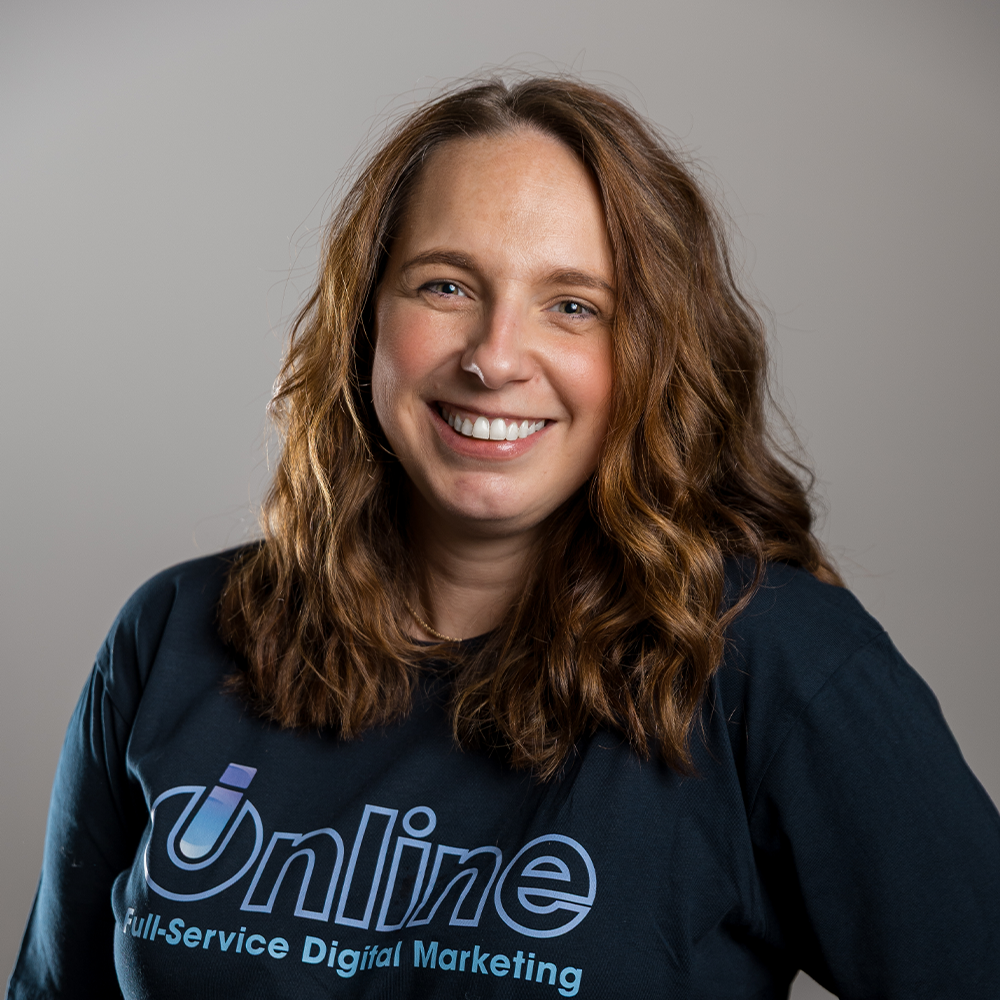
Melissa Stewart: Today we’re joined by Claire Sempf, our Website Designer. Claire is going to walk you through five of the most common things we find on websites that stop them converting visitors into leads — and what to do about each one. We’ve got some great examples to showcase along the way, and at the end of the session you’ll have a quick five-minute check you can run on your own site today. Over to you, Claire.
The Frame
Claire Sempf: A lot of people assume when their marketing isn’t working that the problem is the marketing. The instinct is to change the campaign, change the platform, or spend more. And sometimes that is the right thing to do.
But in most cases, when we go into an account and look at what’s actually happening, the traffic is there. People are finding the site and clicking through. The marketing is doing its job.
The problem is what happens next. Most businesses treat the website as a fixed asset — it’s built, it’s live, it’s done. But the website is what determines whether that traffic becomes an enquiry, a booking, or a customer.
The better question to ask is: is my website set up to convert the traffic it’s already getting?
Today we’re going through five signals that help answer that: clarity, action, trust, mobile, and speed. When these five are working together, the website converts. When they’re not, visitors leave.
Signal 1 — Clarity
Claire Sempf: The first signal is clarity. Can people tell immediately who you help and what you do?
You need to answer that question within the first few seconds. If it’s not obvious, people will leave.
The fix is to make sure your headings tell people exactly who you help and what you do, that the heading is high up on the page, and that you’re using your client’s language — not your industry language.
A few examples doing this well: Pacific Electrical makes it immediately obvious what services they offer and who they’re for. The driving school uses simple language — it’s easy to understand exactly what you’re getting.
People shouldn’t have to think too hard. The clearer you are, the more likely your audience is to take the next step.
Signal 2 — Action
Claire Sempf: The second signal is action. When someone lands on your website, do they know what to do next?
Most people won’t hunt around for information. If you’re not guiding them to the next step, they’re likely to do nothing — which means a lost enquiry.
The fix is a clear call to action. Tell people exactly what you want them to do — book a consultation, request a quote, call now.
Managing Pain serves two audiences: people experiencing pain and healthcare professionals. We added two clear buttons so visitors know exactly where to go. Another example is Deep Blue Electrical and Air Conditioning — bright blue Get a Quote buttons front and centre, so there’s no confusion about what to do next.
Signal 3 — Trust
Claire Sempf: The third signal is trust. People need reassurance before contacting or buying from you.
You want reviews, examples of your work, and real photos. If there’s no proof, visitors hesitate and keep looking at other options.
The fix: show your reviews, show your work, and use real images rather than generic stock photos.
KSB is a strong example — they have Google reviews front and centre and photos of students who have completed training. That combination of social proof and real-world images builds trust, demonstrates quality, and they also have clear headings and strong call-to-action buttons.
Signal 4 — Mobile
Claire Sempf: The fourth signal is mobile. Over 70% of people are browsing on their phones, so your website needs to work on mobile. If it doesn’t, you’re losing enquiries before visitors can even contact you.
It’s not just phones — people are using desktops, laptops, tablets, and multiple phone sizes. Your website needs to be fully responsive.
The good news is it doesn’t have to be expensive. With Mark is a good example — they had a smaller budget so we started with a simple five-page website. It looks professional, works across all devices, and gives visitors confidence. That’s often all you need.
If users can’t easily read or navigate your website from their phone, they won’t convert.
Signal 5 — Speed
Claire Sempf: The fifth signal is speed. People expect websites to load instantly. If yours loads too slowly, they’ll go back to Google and click the next result.
The most common fixes: optimise your images, remove plugins you’re not using, install caching, and use a quality host.
Making sure your website loads quickly matters because it determines whether people even get to see your offer.
Case Study — Cheaper Car Rental
Claire Sempf: Here’s an example of a website with all five signals working together.
Before they came to us, Cheaper Car Rental were getting traffic but most leads were coming from Gumtree — not a scalable position. They’re in a competitive market on the Gold Coast, up against well-known national brands.
The issue wasn’t a lack of traffic. They had limited content, no real SEO structure, and no tracking in place.
We rebuilt the site from the ground up — mapped out their strategy, restructured the site, wrote copy for search and for customers, and redesigned every page with conversion in mind. During the rebuild we set up a landing page and ran Google Ads to keep enquiries coming through.
Once the site was live: over 600 calls, emails, and form submissions in the first six months. Page 1 rankings for over 90 keywords. A key event rate of 78% — three out of every four visitors took action on the site.
Nothing changed about the market. Same competitors, same ad spend. The difference wasn’t more ads. The difference was a better website. The traffic didn’t change. The website did.
The Five-Question Check
Claire Sempf: Take five minutes and think about your own website.
If you answered no to any of those, that’s where to start. It’s cheaper to improve a website that converts than to keep paying for traffic to one that doesn’t. A website that isn’t ready to convert is wasted spend.
Free Website Audit
Melissa Stewart: What we’re offering today for all attendees is a free website audit. If you’re not sure whether your website needs a full rebuild or just a few tweaks, we can take a look.
It’s a professional check across 40+ criteria. You’ll receive a written report with prioritised recommendations covering speed and technical health, Google presence and local visibility, keyword performance, and how you’re tracking against competitors.
No obligation. The link to claim your audit will be in the follow-up email along with the replay.
Q&A
Q: What’s the most common thing you find when you audit a small business website?
Claire Sempf: Usually it’s that the site doesn’t explain what the business does clearly. Business owners know their business so well that they assume visitors do too. The second thing is broken buttons, broken links, or no buttons at all — visitors don’t know what the next step is.
Q: My website was built a few years ago. How do I know if it needs a full rebuild or just some fixes?
Claire Sempf: Age isn’t necessarily the issue — we’ve seen older sites that perform just as well as new ones. It comes back to the five signals. If the foundations are good, make improvements. But if it’s not converting and it’s hard to update, that’s when I’d look at a rebuild.
Q: We do good work but clients don’t often leave reviews without being asked. Any tips?
Claire Sempf: Ask at the right moment — right after you complete a job or they’ve received your product. Send an email with a direct link to your Google Business Profile to make it easy.
Melissa Stewart: Multiple touch points help too. If team members meet clients face to face, get them to bring it up in conversation. Having it on invoices or in follow-up communications also helps — not pestering, just a couple of natural opportunities.
Q: I don’t collect Google reviews. How do I do that?
Claire Sempf: Within your Google Business Profile there’s a link you can share with anyone you want. That’s the easiest way. We’ll be covering Google Business Profile in a future Signal Sessions — or reply to the follow-up email and we can send instructions through.
Q: If all five signals are correct, how do I know if my website is costing me leads?
Claire Sempf: If all five signals are right, your website should be converting. It could be a tracking issue. I’d double-check those five questions again, and if you’re still not sure, the free website audit should identify where to start.
Q: Do you need a multi-page site or can a one-page website work?
Claire Sempf: A one-page website can work, especially for a newer business with a smaller budget. The key isn’t the number of pages — it’s the five signals. As your business grows, you can build out from there.
Close
Melissa Stewart: Thanks everyone for joining us. Run that five-question check on your own site this week. The replay and your free audit link will be in your inbox shortly.
Next month we’re covering You’ve Tried AI for Your Website Copy. Here’s Why It Didn’t Work — with Duncan Croker, our Content Strategist. It’s about the words on your website and why most business owners get this wrong without realising it. Register via the link in today’s follow-up email. See you next month.
Save Your Seat
Attendance is limited to 200 seats. Even if you can’t make it, we’ll send you the recording.
Wednesday 23 September 2026
People
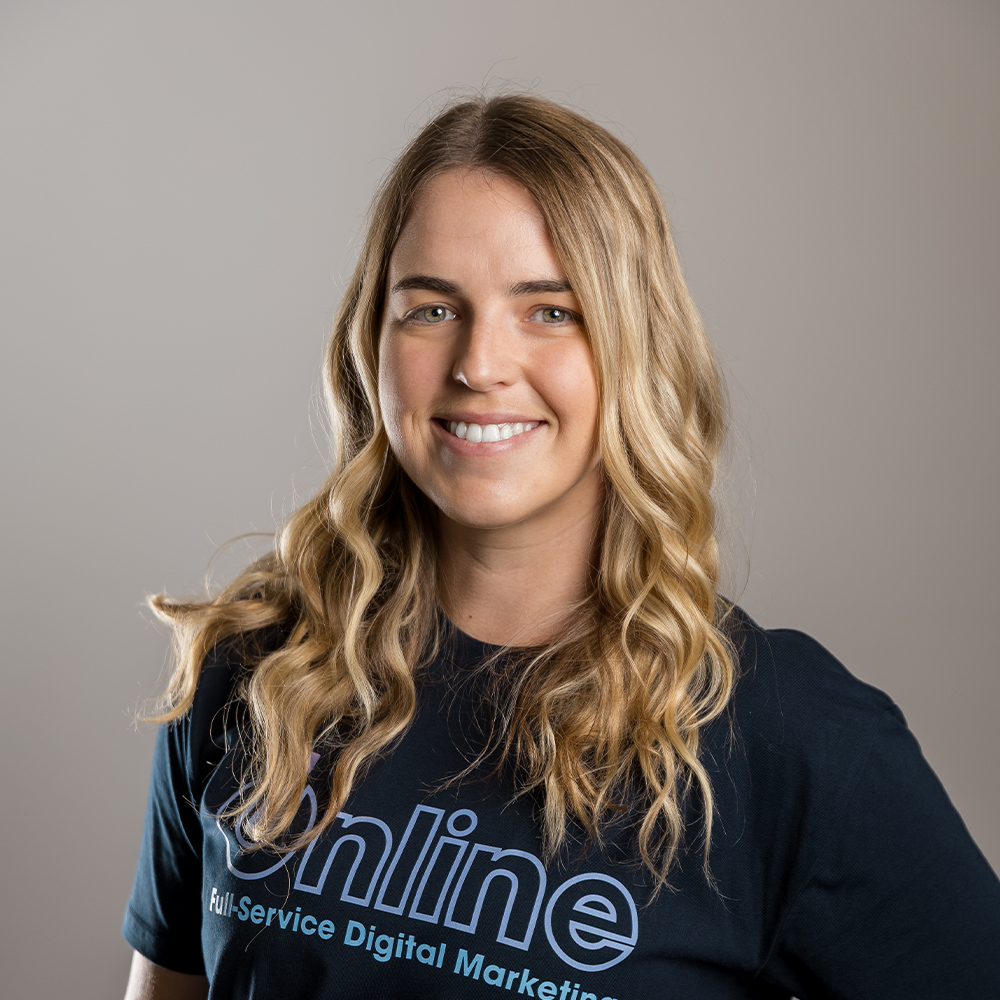
Website Designer
Melissa Stewart
Client Success Manager
30 minutes. Zero obligation. Online or in-person.
Team Member Name
Team Member Title

Watching: TV

Listening: Music

Reading: Book

Drinking: Drink

Quoting: Quote

Obsessed With: Love
Why I love what I do:
Enter text
I am not about:
Enter text


