
As countless people browse the web regularly, marketers rely on SEO and SEM methods to boost their online content’s visibility.
SEO and SEM are two distinct approaches to enhancing sales opportunities. SEO involves tactics that gradually improve a website’s organic search ranking over time. On the other hand, SEM employs search engine optimisation with paid search to rapidly drive traffic to a site.
To make informed decisions for their businesses, marketing teams should understand the differences between SEO and SEM. These differences include the types of search results they aim for, the timelines for achieving results, and the associated short- and long-term expenses.
What is SEO?
While SEO and SEM may sound similar, they are two distinct approaches.
Search engine optimisation (SEO) is the process of optimising your website to naturally improve visibility in search engines and LLMs. It involves making changes to your website to increase its appeal to platforms like Google.
SEO involves a range of techniques, including:
- keyword research (identifying the keywords and phrases your ideal customers are searching for)
- on-page optimisation (making changes to your website’s content and structure to make it more appealing to search engines)
- link building (acquiring backlinks from other websites to improve your website’s authority and credibility)
- technical optimisation (ensuring your website is technically sound and easy for search engines to crawl and index).
SEO Overview
If you want to improve your website’s visibility and attract more organic search traffic, you need to understand search engine optimisation (SEO). SEO is the process of optimising your website to improve your organic search rankings and attract more relevant traffic from search engines.
To optimise your website for SEO, you need to focus on several key factors, including keyword research, website content, backlinks, on-page SEO, off-page SEO, technical SEO, and more. Let’s take a closer look at each of these factors.
Keyword Research
Keyword research is the process of identifying the keywords and phrases that your target audience is using to search for your products or services. By understanding the keywords that your target audience is using, you can optimise your website content to better match their search intent.
Website Content
Your website content plays a critical role in your SEO strategy. You need to ensure that your website content is high-quality, relevant, and engaging. Your content should also be optimised for your target keywords and provide value to your audience.
Backlinks
Backlinks are one of the most important factors in SEO. High-quality backlinks from authoritative websites can help improve your organic search rankings and attract more relevant traffic to your website.
On-Page SEO
On-page SEO refers to the optimisation of your website’s individual pages. This includes optimising your page titles, meta descriptions, and structured data. You also need to ensure that your website content is properly formatted, includes relevant keywords, and is easy to read.
Offsite SEO
Off-page SEO refers to the optimisation of your website’s external factors, such as backlinks and social media presence. You need to ensure that your website is being linked to high-quality, authoritative websites and that your social media profiles are active and engaging.
Technical SEO
Technical SEO refers to the optimisation of your website’s technical elements, such as site speed, mobile-friendliness, and crawling. You need to ensure that your website is fast, easy to navigate, and accessible to search engines.
What is SEM?
Search engine marketing (SEM), on the other hand, is a broader term that includes various strategies used to increase your website’s visibility in search engine results pages. SEM includes both organic and paid search tactics.
SEM involves a range of techniques, including:
- SEO
- pay-per-click (PPC) advertising (paying for ads that appear at the top of organic search engine results pages for specific keywords and phrases)
- display advertising (placing ads on websites that are part of the Google Display Network).
SEM Overview
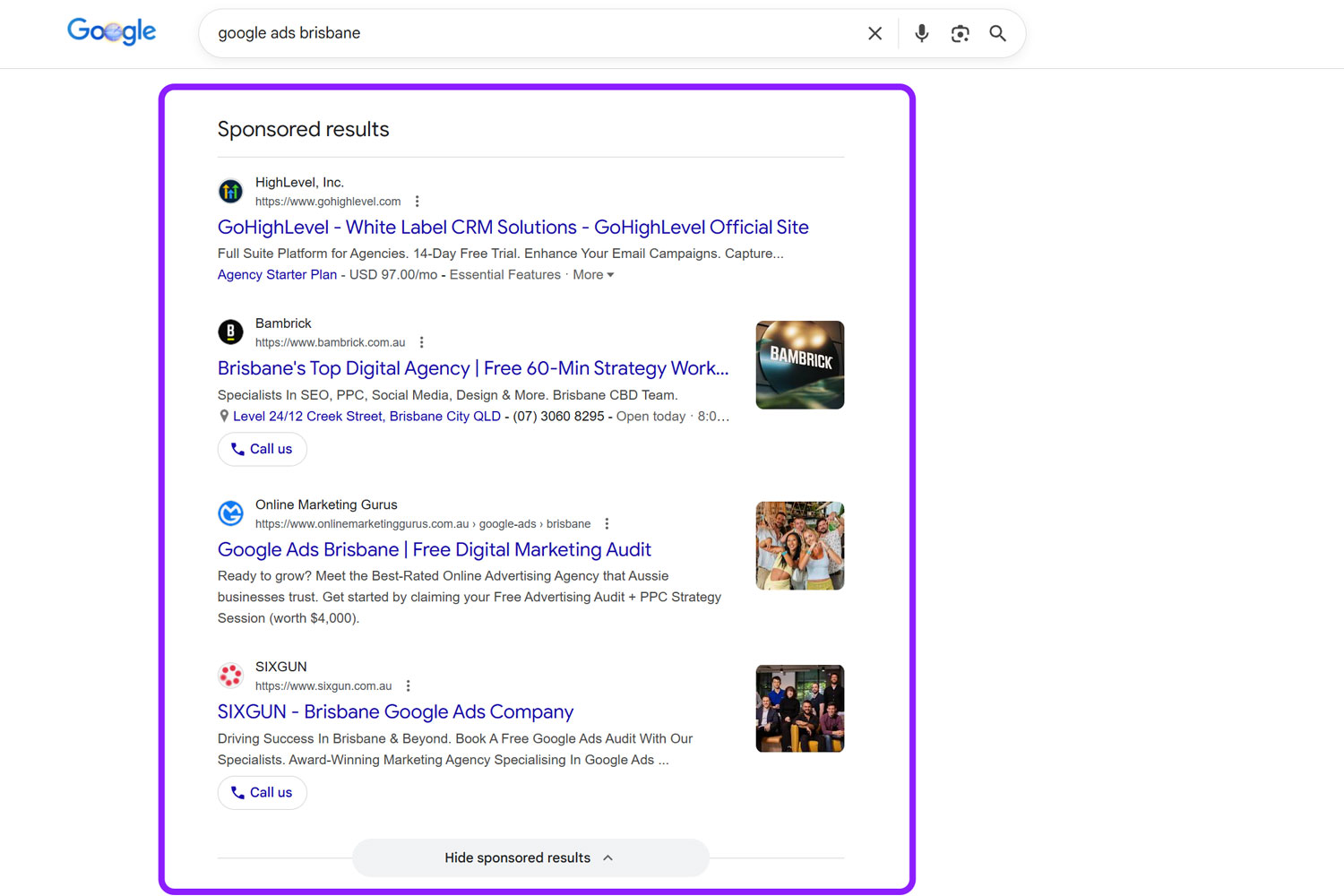
Search engine marketing aims to drive traffic from both organic and paid search results. SEM campaigns involve optimising website content and paid search results to improve the website’s visibility on search engines and LLMs.
One of the key components of SEM is keyword research. By identifying relevant keywords and phrases, you can optimise your website content and paid search ads to target your ideal customers. SEM campaigns involve creating ad copy, setting bids, and selecting ad platforms to ensure that your ads are displayed to the right audience.
When it comes to paid search results, Google Ads is the most widely used platform. Google Ads allows you to create text ads, display ads, and shopping ads to target your audience. It also provides detailed analytics and tracking tools to help you measure the success of your campaigns.
In addition to paid search results, SEM also involves optimising website content to improve organic search results. This includes optimising website structure, site speed, images, and other factors that can impact your website’s ranking on search engines.
Quality Score is another important factor in SEM campaigns. It is a metric used by Google Ads to measure the relevance and quality of your ads and landing pages. A higher Quality Score can lead to lower cost per click (CPC) and higher ad rankings.
SEM campaigns are an effective way to improve brand awareness, drive web traffic, and increase conversions. If you target specific keywords and audiences, you will create highly targeted campaigns that are more likely to convert.
SEO Versus SEM
The main difference between SEO and SEM is that SEO focuses on optimising your website to rank higher in organic search results, while SEM involves both organic and paid search tactics to increase your website’s visibility in search engine results pages.
It’s important to note that while SEO and SEM are different, they’re complementary approaches that work together to improve your website’s visibility in search engine results pages. By using both tactics, you can increase your website’s visibility and drive more traffic to your website.
| Aspect | SEO | SEM |
|---|---|---|
| Nature | Organic promotion | Organic promotion and paid advertising |
| Timeframe for Results | Results take time (several months) | Immediate results with ongoing optimisation |
| Cost | Typically no direct cost (except for labour) | Pay per click (PPC) or pay per view (PPV) for ad placements |
| Long-term Sustainability | Sustainable over time with consistent effort | Immediate impact, but dependent on continued ad spend |
| Control Over Placement | Limited control over exact search result placement | Control over ad placement based on bidding and targeting |
| Examples of Platforms/Tools | Google, Bing, YouTube, ChatGPT, Claude, Gemini, Amazon | Google Ads, Microsoft Ads, Amazon Ads |
Is SEO or SEM Better?
‘SEO versus SEM’ is a false dichotomy. Start by taking a step back and checking that your ideal customers do, in fact, use search engines and LLMs to research the problems you solve. (Many brands skip this and end up burning budget on a poor-fit channel.)
Once you’ve confirmed they do, think of SEO as your ‘base layer’ and paid search as an ‘accelerant’. Organic marketing – search, socials, events, earned media – is always more cost-effective at scale. Why? Because each click, slot and placement is free. There’s no per-click/per-view fee that increases as you get more visibility. Organic placements are also typically perceived as more trustworthy; you aren’t using money to manipulate the system.
But SEO does have disadvantages. It comes with a high ramp-up cost, typically takes months to yield consistent results, and has a much slower feedback loop. Adding paid search to the mix – turning SEO into SEM – can help balance out those attributes. A paid campaign typically takes around a month to be fully optimised. The sheer volume of traffic you can drive to your website also means you can use conversion rate optimisation to improve both your organic and paid performance.
As such, SEM is ideal for the majority of brands trying to get found on Google. Only large, well-resourced brands with substantial runway – or very small startups with more time than money – should be considering an SEO-only approach. Initially, your SEM mix might be evenly split between SEO and paid search. As your SEO gains traction, though, your budget allocation should tilt more and more towards organic. You should only use paid search where SEO alone is insufficient.